

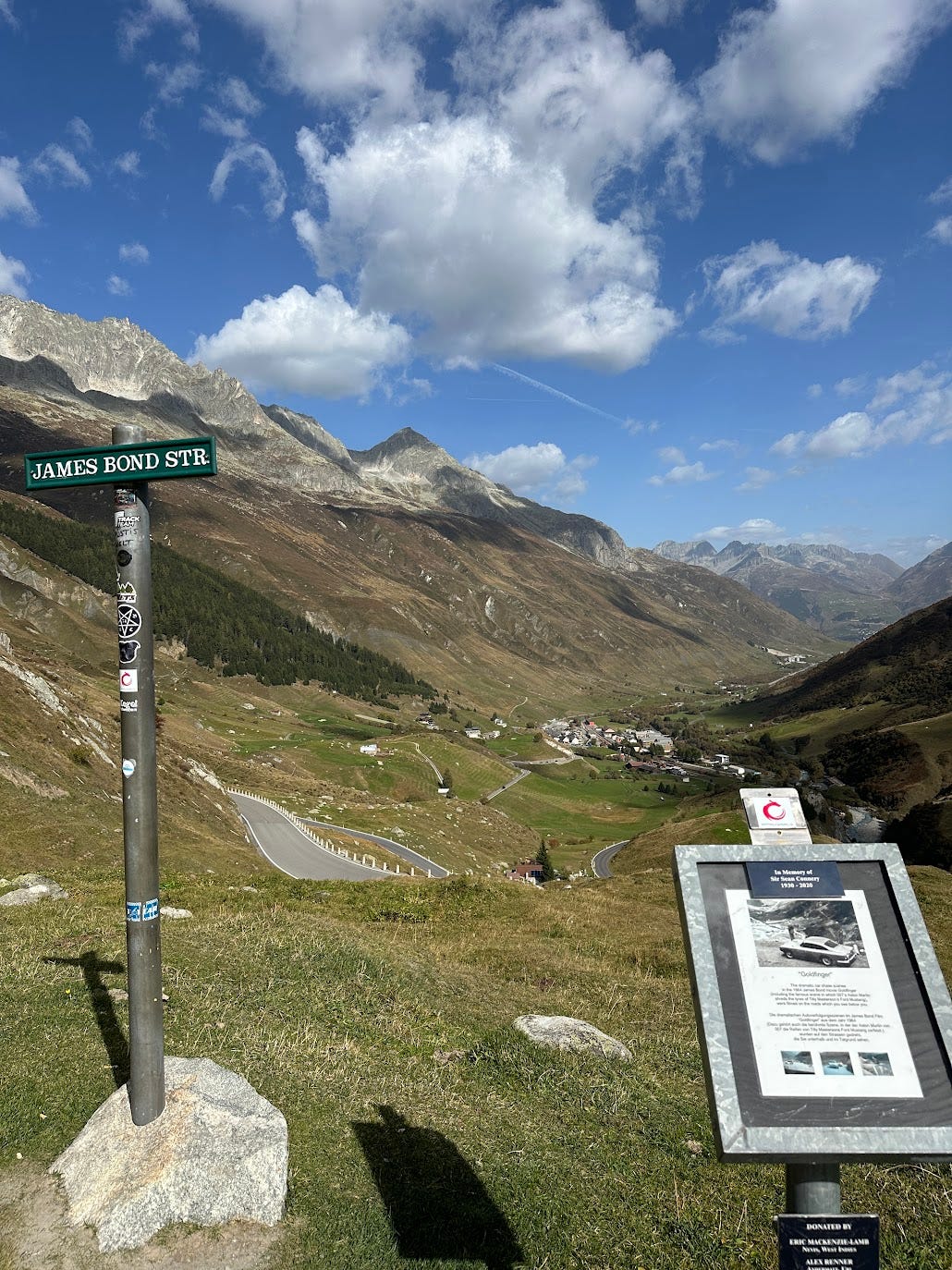
I once drove up the Furka Pass in Switzerland because of a movie. Specifically, because of the Aston Martin DB5, the grey Glen check three-piece suit, and the moment Sean Connery glances in his rear-view mirror and realises he’s being followed. That film was Goldfinger.
Goldfinger is one of those rare films that remains, sixty years on, simply a pleasure to watch. It is remarkably well paced, beautifully made, and completely aware of its own ridiculousness—which is a large part of what makes it so much fun. Gert Fröbe’s Goldfinger is all exaggerated theatricality: his plan to irradiate the world’s gold supply is hysterical in its grandeur, and his stage presence is immense.

“Do you expect me to talk?” “No, Mr Bond, I expect you to die.” Very few films produce lines that bury themselves this deep in popular memory. And then there is Oddjob and his hat, the golden corpse of Jill Masterson, the assault on Fort Knox, Shirley Bassey’s thunderous voice over John Barry’s brassy, propulsive score—a song I have been known to perform at karaoke events in undisclosed locations, and which I maintain I do justice to, though I will grant that Bassey remains preferable—moment after moment of pure, stylish, irresistible cinema. Not too serious, not too heavy. Just supremely confident about exactly what it is.
All of which is why I so enjoyed the new episode of Forbidden Films, hosted by writer-director Wayne Kramer (The Cooler, Running Scared) and producer Barry Germansky (Marlowe, Riff Raff). The podcast describes itself as being about “the movies they won’t make anymore,” and this episode is a deep dive into the Bond films of the 1960s and 1970s—starting with Dr. No and building towards Goldfinger as the film where, as John Barry himself put it, everything came together.
Wayne and Barry discuss the films with infectious knowledge and strong opinions. Wayne saw Goldfinger for the first time on 16mm at a childhood birthday party in South Africa—projected on film, years before home video existed. That kind of love for cinema runs through the whole conversation. They make a persuasive case for John Barry and Ken Adam as the two essential architects of Bond’s sight and sound: Barry supplying the music’s seductive momentum, Adam creating what Barry (Germansky, that is) calls a technological expressionism in which every villain’s lair becomes a monument to his megalomania. The Fort Knox set, built entirely from Ken Adam’s imagination because nobody could describe the real interior, got a complimentary letter from the woman who actually ran the place.
What I particularly appreciated is their argument that Goldfinger was the film that consolidated the Bond template—the gadgets, the heightened villains, the playful innuendo, the balance between genuine peril and tongue-in-cheek fantasy—into something that had never quite existed before in cinema. A new form of highly sexualised, surreal, supremely entertaining popular filmmaking.
A personal note: Barry Germansky was an instrumental proofreader of my book The Weight of Silence, and readers of Philosophy: I Need It have already encountered his short story The Smile That Ended Summer. He is also an experienced, successful Hollywood producer—so when he and Wayne talk about cinema, they speak as both genuine enthusiasts and working professionals. That combination is what makes Forbidden Films such good company.
If you love Bond, film history, or simply the kind of ambitious popular cinema that Hollywood seems barely capable of making now, give Forbidden Films a listen. Start with James Bond—and with Goldfinger, still glittering after all these years.
Listen to the episode:
Follow Forbidden Films:
Facebook
Instagram
X
YouTube channel
If you enjoyed Philosophy: I Need It and want to see more, you can support my work by buying me a coffee or becoming a monthly supporter.
Every contribution makes a real difference. Thank you!
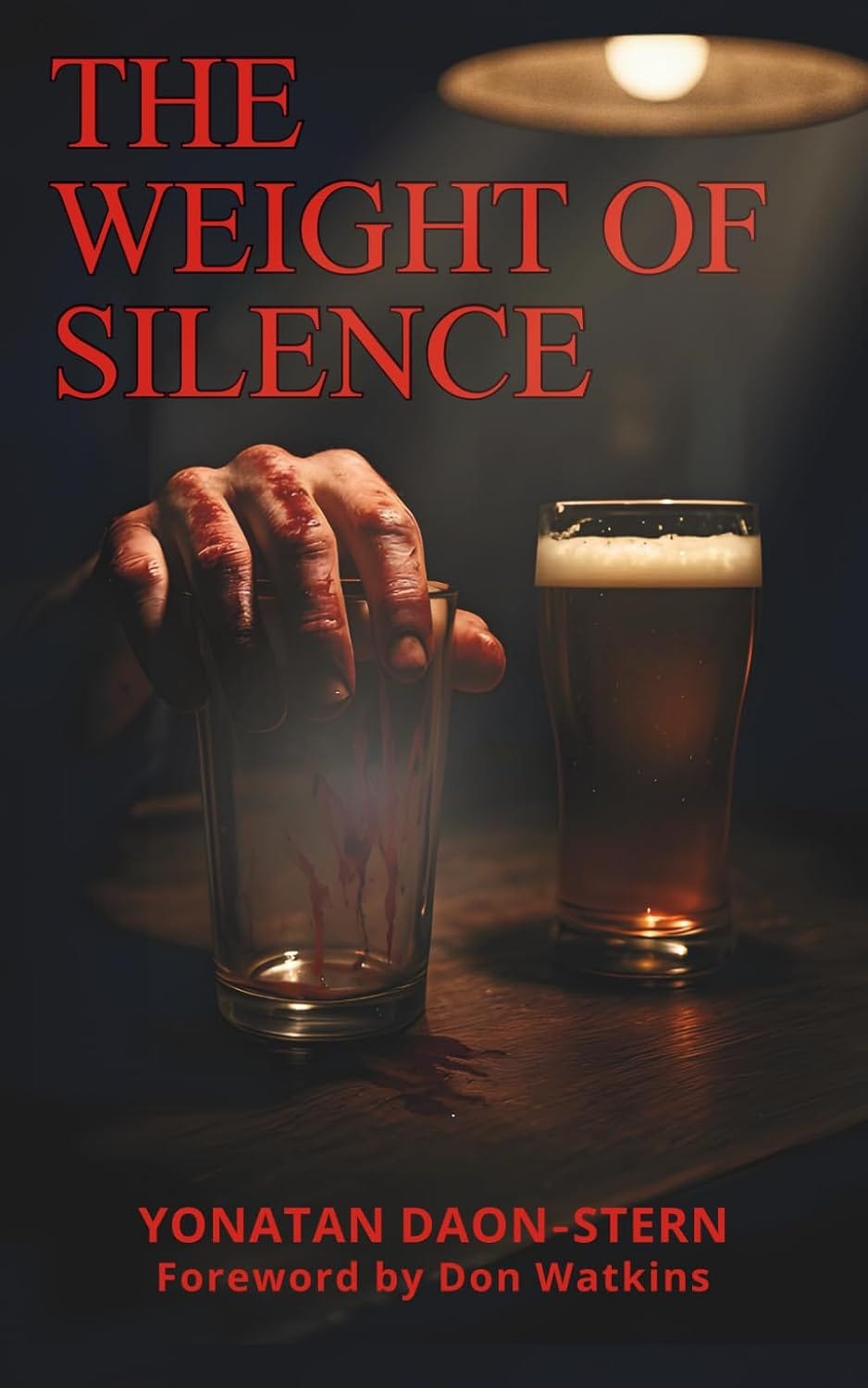
And if you’re looking for something longer, my debut novella, The Weight of Silence, is available on Amazon. Get your copy here.