

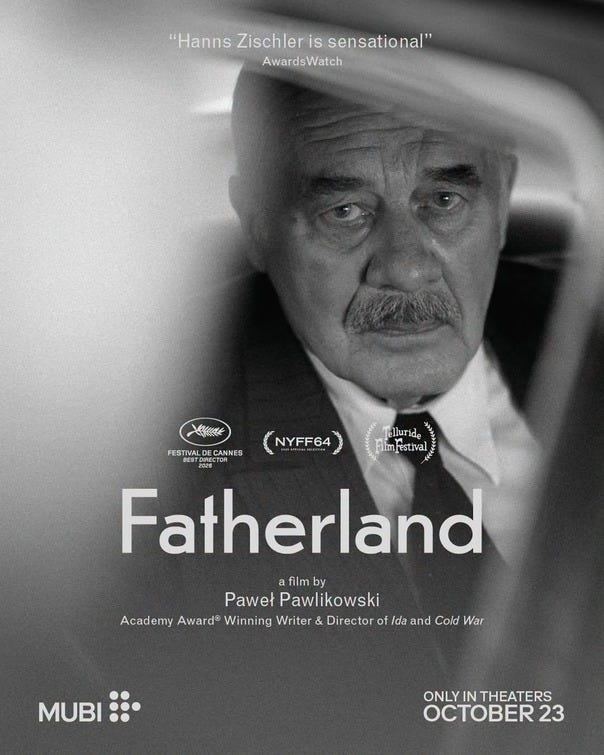
I recently saw Fatherland. It is a film about Thomas Mann’s 1949 visit to postwar Germany. It is one of the most beautiful films I have seen in a long time. I cannot think of a comparable film I have recently watched that is so distinctly, so thoroughly beautiful: the camera work, set and costume design, the soundtrack, and the audio texture. It looks and sounds like a classic from the 1940s and ‘50s, as if the film itself were made in the very world it depicts. If you are still wondering whether to go for the visual experience alone, it is worth it.
There is minimal dialogue. The storytelling is highly visual. Frankfurt is in rubble with destroyed houses as a normal part of the city, and yet a luxury grand hotel and a sense of bourgeois existence persist amid the ruins. The East is distinctly poorer, and the contrast is shown without commentary, just the way it was.
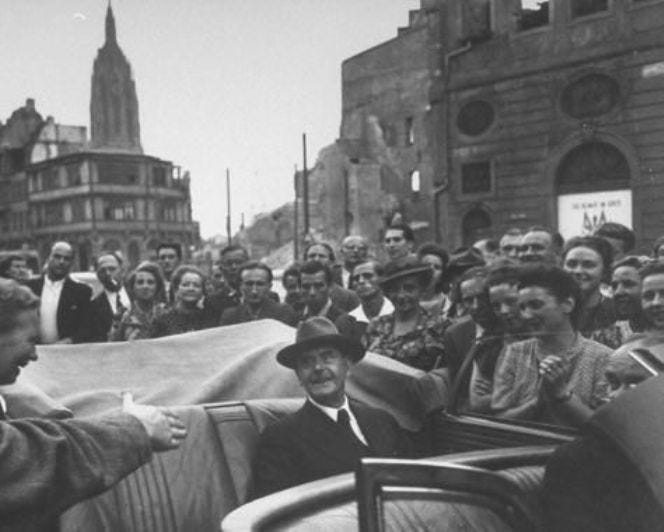
Thomas Mann, the novelist who wrote Buddenbrooks, Doctor Faustus, The Magic Mountain and many more classics, returns to Germany in 1949 with his daughter Erika for the first time since he left his homeland in 1933 when the Nazis rose to power. He is in Frankfurt to receive the Goethe Prize. The press is all over him. This is not merely a famous writer collecting an award, but an exile returning to a fatherland that drove him away, now defeated and in ruins.
To understand the drama of that return, one must understand something of the Germany he represents. In my essay on Mann and Bildung, I wrote about the world that formed him: the home, the books on the shelves, the music being played, the conversations being had, and the standards being assumed of the common man. Literature, music and philosophy were not museum pieces or amusement for the rich. They were an inheritance, part of what becoming an educated human being meant. Mann carries that world with him. In him, the Germany of books, music and intellectual life returns to the country that had burnt its books.
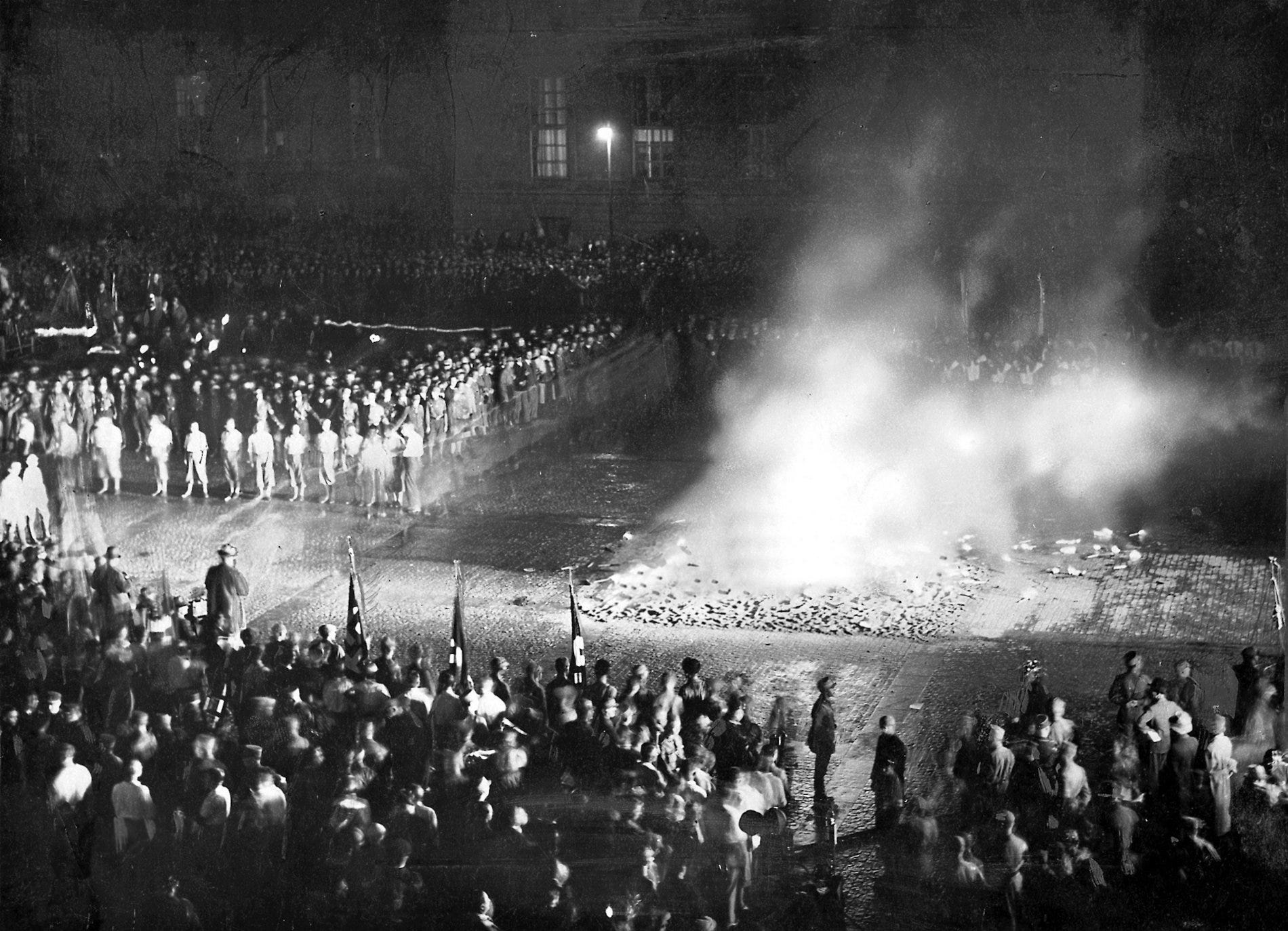
That does not make the old Germany of Mann innocent. As I argued in that essay, a culture can cultivate taste without cultivating moral clarity, and Weimar Germany or the one that came before it was far from it (and for more on that I recommend reading Dr Leonard Peikoff’s Ominous Parallels). A musical nation can still become barbaric. But Germany’s betrayal of its intellectual inheritance does not make that inheritance worthless. When Mann comes back to speak about Goethe, he is defending something that nation desperately needs: for example, the idea of ‘Streben’ in Faust, an affirmation of man’s capacity for moral redemption through his own ceaseless pursuit of purpose in life. That idea is a cornerstone of the enlightenment.
He who continually strives, him we can redeem. - Goethe’s Faust
Now think about the spectacle. Mann receiving a literary prize named after the supreme figure of German civilisation amid the rubble of Frankfurt. The books still matter. The man who carries that inheritance is still here. But the world that formed him, that gave those references their place in everyday life, is almost impossible to recognise around him. This is what makes the scene so strange, not the supposed irrelevance of what he has come to say.
And then he goes to Weimar, in the Soviet occupation zone, to receive another Goethe prize and deliver essentially the same speech. There is great irony in it: two emerging German states, already becoming ideological enemies, both reaching for Goethe and for Mann as symbols of the Germany they wished to claim. The film uses this visual and historical contrast masterfully: Mann against the ruins and Mann between East and West, without ever telling you what to think.
Richard Strauss, who died in 1949, was still composing in the German Romantic tradition after the war: in 1948 he completed his Four Last Songs, setting poems by Hesse (1877-1962) and Eichendorff (1788-1857). That musical world was still alive in him, even after the country around it had destroyed itself. In his last weeks, he said that he had outlived even himself. In this sense, the phrase belongs to Mann too. Buddenbrooks, the merchant family in Lübeck; Death in Venice, the cultivated world of old Europe in its final decadence. Man was the writer of a world that is no more; even in his works, that world was on the verge of death.
Stefan Zweig was the same kind of figure, but Zweig took his own life in 1942 because he understood that the world he belonged to was gone. Europe destroyed itself, and he went with it. There is something poetically fitting and deeply tragic about Zweig’s suicide once you see what survival looked like for men of that world — a man walking through the rubble, discovering that his country is now an alien land, a battleground between East and West. These men are walking ghosts.
There is something ridiculous about the spectacle of the Goethe Prize amid the rubble, but that does not make Mann’s return futile. The film manages to holds both at once: the importance of what he has come to defend and the absurdity of the scene in which he defends it. Those ideas are desperately needed, yet their representative looks almost out of place in the world that now needs them. It captures that tension and extends it into Mann’s personal life in ways you would not have considered.
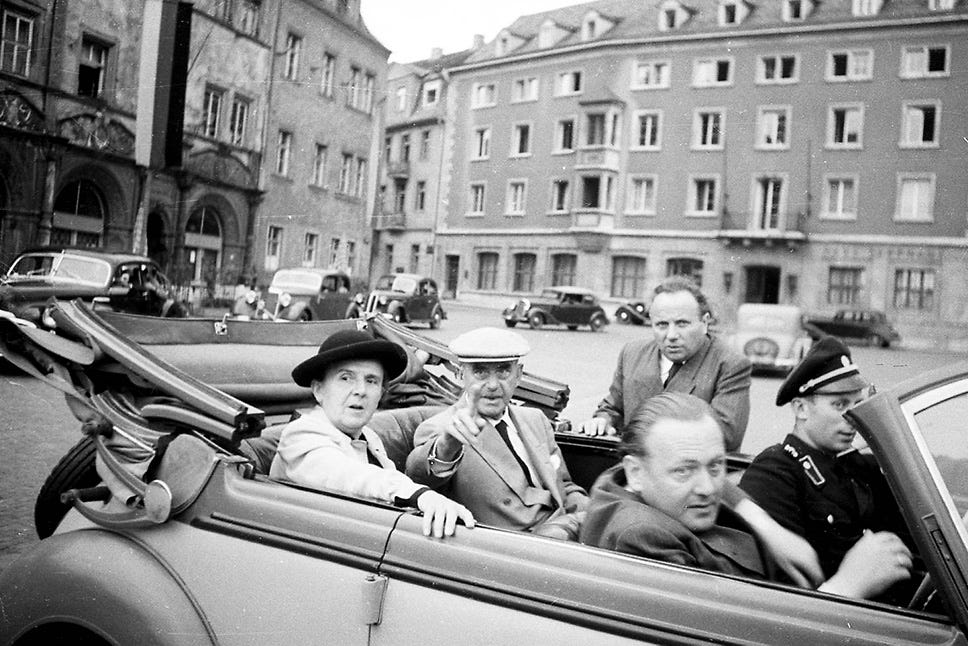
There is a striking scene in which Mann speaks with the Soviet officer in the city of Weimar, who tells him that Goethe was close to Marx intellectually. Mann is perplexed and asks in what sense, and the answer never comes. The film shows this exchange with sophistication and elegance, letting the gap speak. Different forces want to use Mann’s stature for their own purposes. There is a grotesqueness to it, which seems to fly over Mann’s head, but not over his daughter’s.
I will not say more. The film is serious, and it deserves to be seen rather than summarised. In a world in which films seem to grow ever shallower, visually louder, intellectually thinner, and increasingly afraid to leave anything less than obvious, Paweł Pawlikowski’s Fatherland stands apart. It is an intellectually serious and visually masterful film, one that assumes its audience is capable of looking, listening, and thinking. Go and watch it.
If you enjoyed Philosophy: I Need It and want to see more, you can support my work by buying me a coffee or becoming a monthly supporter.
Every contribution makes a real difference. Thank you!
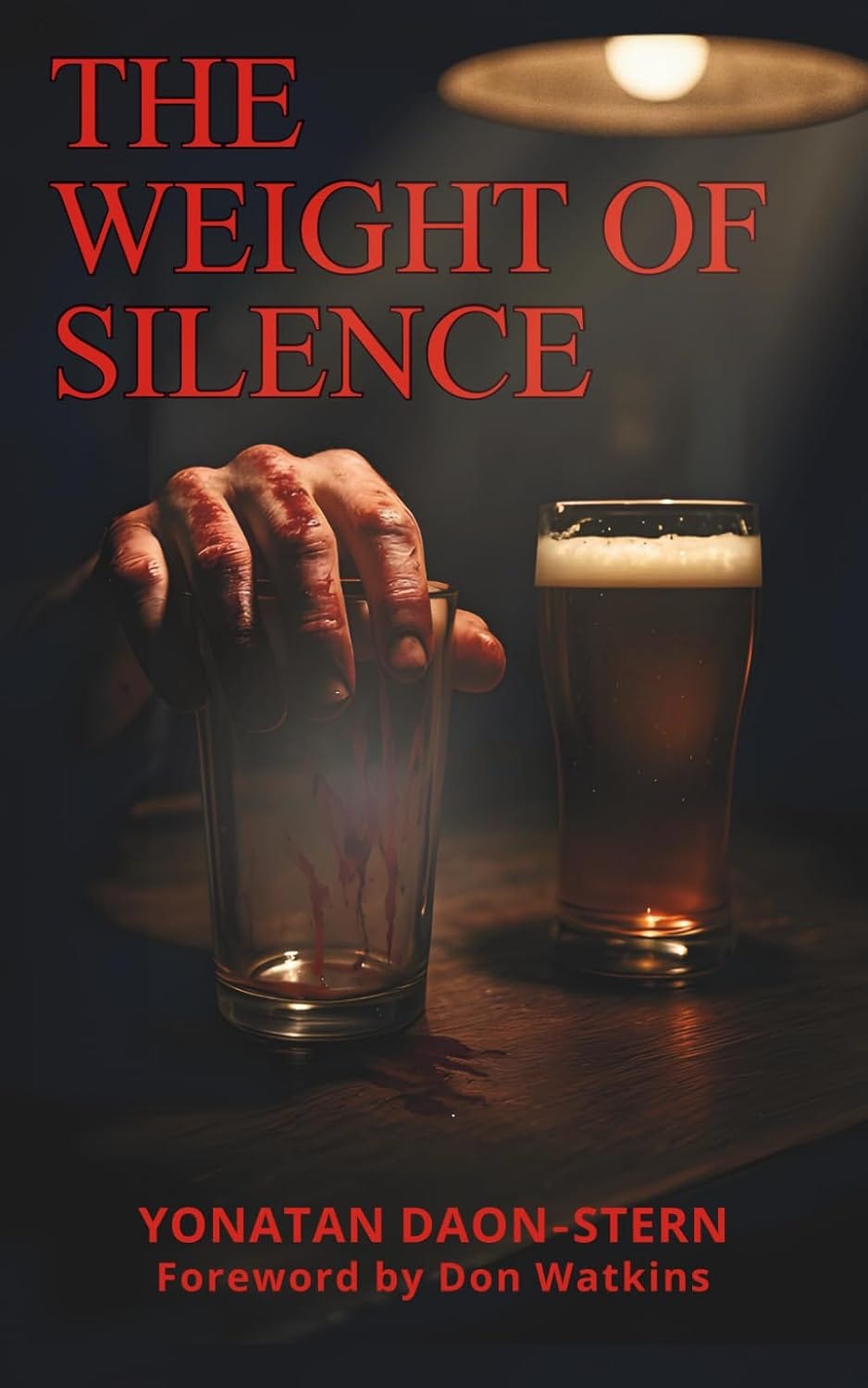
And if you’re looking for something longer, my debut novella, The Weight of Silence, is available on Amazon. Get your copy here.