

By any reasonable account, Vivian Silver genuinely wanted to do good.
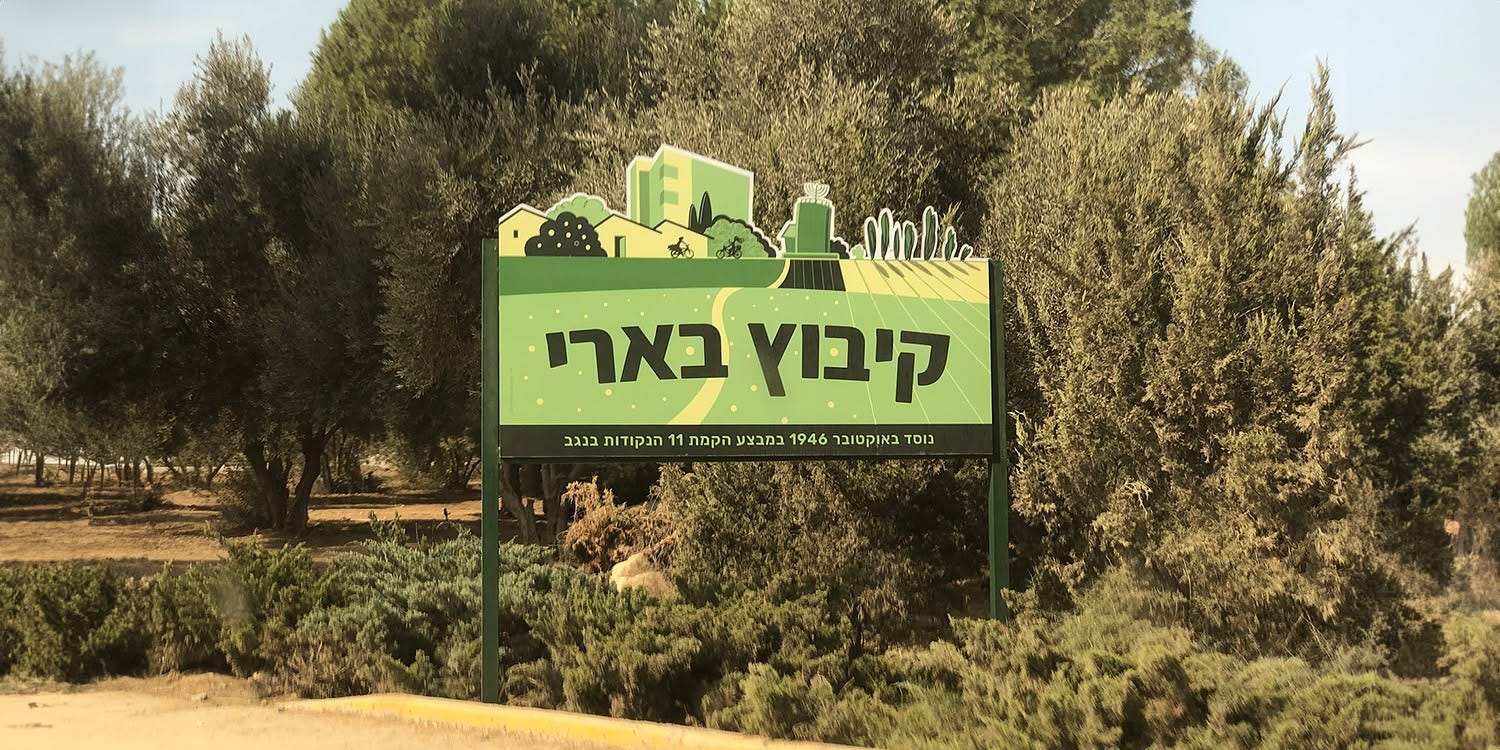
Born in Winnipeg, Canada, in 1949, she immigrated to Israel in 1974 and eventually settled in Kibbutz Be’eri, a few kilometres from the Gaza Strip. Silver devoted much of her adult life to encouraging cooperation between Israelis and Palestinians. She brought Jews, Bedouins and Palestinians together through joint projects, maintained relationships with people in Gaza, helped Gazan patients reach Israeli hospitals, and co-founded Women Wage Peace. Three days before October 7, she helped organise a gathering of roughly 1,500 Israeli and Palestinian women calling for peace.
I do not doubt that her intentions were benevolent. By all accounts, she wanted Israelis and Palestinians to live alongside one another in peace and spent decades trying to make that possible.
Then came October 7.
Palestinian terrorists entered Kibbutz Be’eri. Silver hid in the safe room of her home while texting with her son. The terrorists burned her house.
For more than a month, her family believed that she had been kidnapped to Gaza because no identifiable remains had been found.
Silver’s fate remained a mystery until archaeologists from the Israel Antiquities Authority were brought into the destroyed communities to sift painstakingly through the ruins. Only then did they recover remains from Silver’s home that could be identified through DNA. On November 13, her family learned that she had never been kidnapped. She had been murdered in her own home on October 7.
There is one detail I find almost unbearable. Yonatan Zeigen later recalled that he had returned to the burned house before his mother’s remains were discovered. He walked through it, searching the ashes for something to take with him, still believing that his mother might be alive in Gaza. Her remains were there all along.
I cannot imagine a more horrific end for a woman who had spent so much of her life trying to make peace with people on the other side of that border.
Silver never had the chance to tell us what she would have made of October 7. Her son did.
Zeigen was communicating with his mother during the attack and could hear the gunfire outside her home. In the years since, he has not abandoned her political outlook. He embraced it with greater conviction.
In one interview, responding to Israelis who described October 7 as a moment of disillusionment, an awakening from the false dreams of peace—Zeigen said almost exactly the reverse:
If they had listened to what she was saying, we wouldn’t be here. [1]
He explained that he had awakened from the fantasy that Israelis could continue living normal Western lives while the “occupation, conflict and war continued”. And when confronted with the argument that establishing a Palestinian state after October 7 would constitute a reward for terrorism, his answer was extraordinary:
We need a Palestinian state. We need it. It is a reward for us.
I find this genuinely baffling.
This is what makes Zeigen’s case important: His case raises a broader question. His extremity makes him a particularly clear example of a broader phenomenon. We often encounter people whose political or moral conclusions seem detached from reality, yet we cannot understand them.
Zeigen’s case pushes that problem to an extreme. He experienced the consequences of this conflict in the most personal and brutal way imaginable. Yet the experience did not overturn the political ideas he inherited from his mother. It appears to have strengthened them.
How does one make sense of that?
It would be easy to brush Zeigen aside as stupid, crazy, or simply another radical leftist. I understand the temptation. When I see activists throwing soup at paintings or blocking roads for a loony cause, I often assume that something is wrong with them.
The author Mark Manson calls such activists “empty human beings, desperate for their lives to mean something,” [2] and suggests that their activism may express deeper psychological problems. Perhaps sometimes it does. But how would I know? I do not know these people well enough to diagnose their psychology, and Zeigen makes that explanation unsatisfying: he appears thoughtful, composed and able to explain his beliefs. Perhaps grief strengthened his attachment to his mother’s worldview; perhaps not. Without evidence, these are speculations about a stranger’s mind.
None of this tells me whether he is right. Calling Zeigen stupid gives the puzzle a name; psychologising him gives me a story. Neither helps me understand how a man could experience October 7 so personally and emerge with his previous political convictions strengthened rather than shattered.
Fortunately, I do not need access to his psychology to judge him.
He tells us what he believes.
One passage in the interview is particularly revealing. Speaking about the rockets fired at Israel, Zeigen says:
The fact that missiles are aimed at us does not happen in a vacuum. It never happened in a vacuum. It was always part of a dynamic that can be changed by both sides.
On this point, I agree with him entirely.
It did not happen in a vacuum.
But what was in that vacuum?
For the sixteen years before October 7, Hamas governed Gaza. It won the 2006 Palestinian legislative election and took exclusive control of Gaza in 2007. Its ideology wasn’t a secret. Its covenant invoked a religious text calling for Muslims to kill Jews and presented genocide against Jews as the only means of liberating Palestine.
That was part of the context surrounding October 7.
So yes, it did not happen in a vacuum. It followed years in which an Islamist organisation openly committed to Israel’s destruction governed the territory beside Israel, armed itself, built a vast military infrastructure and prepared for war.
Zeigen, however, identifies a very different context. Elsewhere in the interview, he says that, on both sides, the real division is not between Israelis and Palestinians but between “fundamentalists and people who want to live”. On this view, extremists on both sides sustain the violence, and Israel can help break the pattern by offering Palestinians a political settlement.
That statement reveals the framework through which Zeigen evaluates the conflict, but the framework is not neutral.
October 7 was not the work of an impersonal “cycle.” Thousands of Gazans chose to attack Israel. They crossed the border, burned homes, murdered more than a thousand Israelis, including Zeigen’s mother, and took hundreds of hostages. The moral responsibility for an atrocity belongs solely to the people who chose to commit it.
Invoking a reciprocal “dynamic” in this context is morally depraved.
If a man breaks into a home and murders its occupant, we do not begin by asking what the victim might have done differently. Whatever circumstances preceded the crime, somebody chose to commit it. Context may help explain causes; it does not redistribute moral responsibility for the act.
Gaza matters because Zeigen is proposing more than dialogue. He said that a Palestinian state is a reward.
But Gaza had already been provided that very reward.
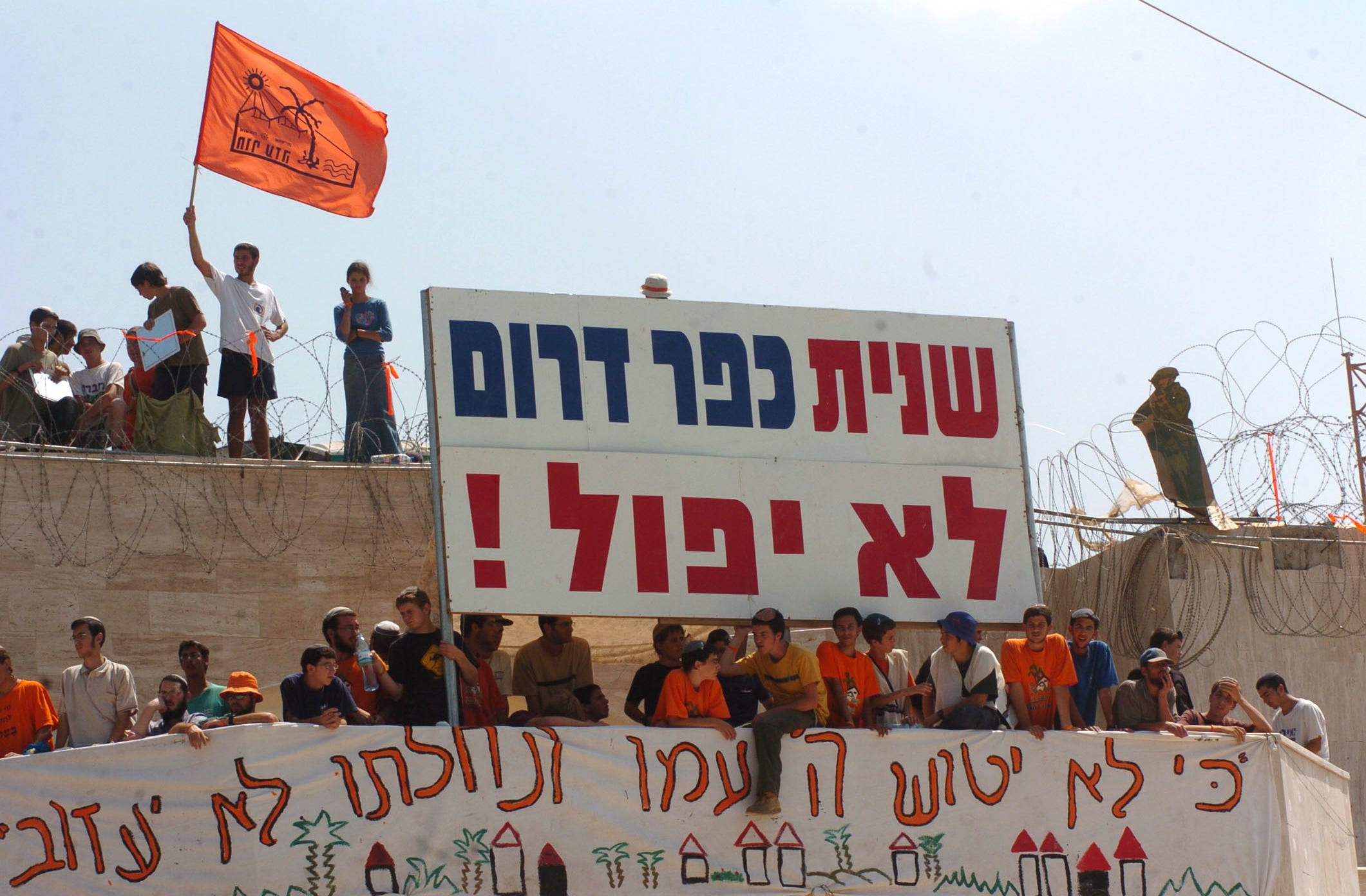
In 2005, Israel used brute state force against its own citizens to uproot every Israeli community in Gaza, expelling thousands of Israelis from their homes in direct violation of their property rights. It then withdrew its permanent military presence, leaving Gaza to Palestinian rule.
After Israel’s total withdrawal, Gaza was an independent Palestinian state.
What did the Gazans do with it?
The regime they created did not reflect the humanistic values Silver and Zeigen claim to defend. The regime murdered political opponents and critics, threw gay people from rooftops and made Gaza one of the worst places to live in the entire world.
If one cares deeply about peace, individual freedom and human welfare, why expand the territorial reach of a political movement fundamentally hostile to those values?
The attack on October 7 was launched from, orchestrated and later celebrated by the Palestinian state.
Zeigen’s conclusion that Israelis need a Palestinian state is a theory already tested in Gaza. If his answer is that Gaza was insufficient—that Palestinians require more territory, greater sovereignty or an additional state in the West Bank—then the question becomes more urgent:
Why should Gaza’s experience of Palestinian self-government make one want to reproduce it on a larger scale?
The logic of Zeigen’s answer is monstrous: even after Israelis withdrew from Gaza and the result culminated in his mother’s murder, the conclusion is that Israel has still not sacrificed enough. The victims’ deaths become another argument for what they must surrender next. The sacrifice failed; therefore, sacrifice more.
And here I would agree that Israel bears responsibility for October 7, but my reason is almost the opposite of Zeigen’s.
Israel allowed an openly hostile political and military organisation to grow beside its border for years. It tolerated its military build-up and repeatedly failed to take its stated beliefs and intentions seriously.
The failure was not that Israel took Palestine’s ideas too seriously.
It was that Israel failed to take them seriously enough to act decisively to protect its citizens.
This is what makes Zeigen’s response intelligible to me. His problem is not that he has failed to face reality. Reality could hardly have confronted him more brutally. The issue is the ideas through which he comprehends it.
Given his premise that the conflict is a reciprocal cycle between extremists on both sides, even October 7 can be absorbed into his framework. The massacre becomes further proof that the cycle must be broken through another political appeasement.
Calling Zeigen stupid does not explain his response to his mother’s murder.
His ideas do.
Unlike speculation about his intelligence, grief or private psychology, Zeigen’s ideas are available for judgment. He states them publicly, and I can compare them with reality: with Hamas’s ideology and record in Gaza, Israel’s withdrawal, the history of the conflict and October 7 itself. And because ideas are not detached from the people who hold them, I can judge not only whether his conclusions are false, but what his choice to accept and advocate them tells me about his own judgment.
Ideas guide action, and political ideas can endanger all of us. That is why they—and those who advocate them—should be judged seriously, by reference to reality rather than stories invented about their psychology.
So when somebody’s response to reality seems incomprehensible, I try to resist the intuitive question:
What is wrong with this person?
And ask instead:
What does he believe, and is it true?
If you enjoyed Philosophy: I Need It and want to see more, you can support my work by buying me a coffee or becoming a monthly supporter.
Every contribution makes a real difference. Thank you!
And if you’re looking for something longer, my debut novella, The Weight of Silence, is available on Amazon. Get your copy here.
[1] “אם היו מקשיבים לה, לא היינו במצב הזה” [“If They Had Listened to Her, We Wouldn’t Be in This Situation”], interview with Yonatan Zeigen, son of Vivian Silver, DemocratTV, YouTube.
[2] Mark Manson, “Intellectuals Are F*cking Idiots: Why the Smartest People Get Trapped by Their Own Minds,” Substack, April 14, 2026

That you took the time to write this moving and simple piece is commendable. It says in a few words all that is wrong with the way the vast majority of people, Israelis included, continue to discuss and shape the way Israel and its conundrum with the Palestinians so unworthy of that name are handled. You may as well be talking about the American White House, the Israeli government, the anti-Israel marchers across Europe, the elites and the street, as you are about this unfortunate woman and her unfortunate son. The heart weeps at the idiocy and turpitude, even though you say simply look at what they believe. Verily, it is almost beyond words. Indeed, it is beyond words.
Must also be a strong element of low self-esteem there. Imagine how little you must value your life, to consider that it's ok for a barbarous punk to massacre you because something something cycle of violence.