

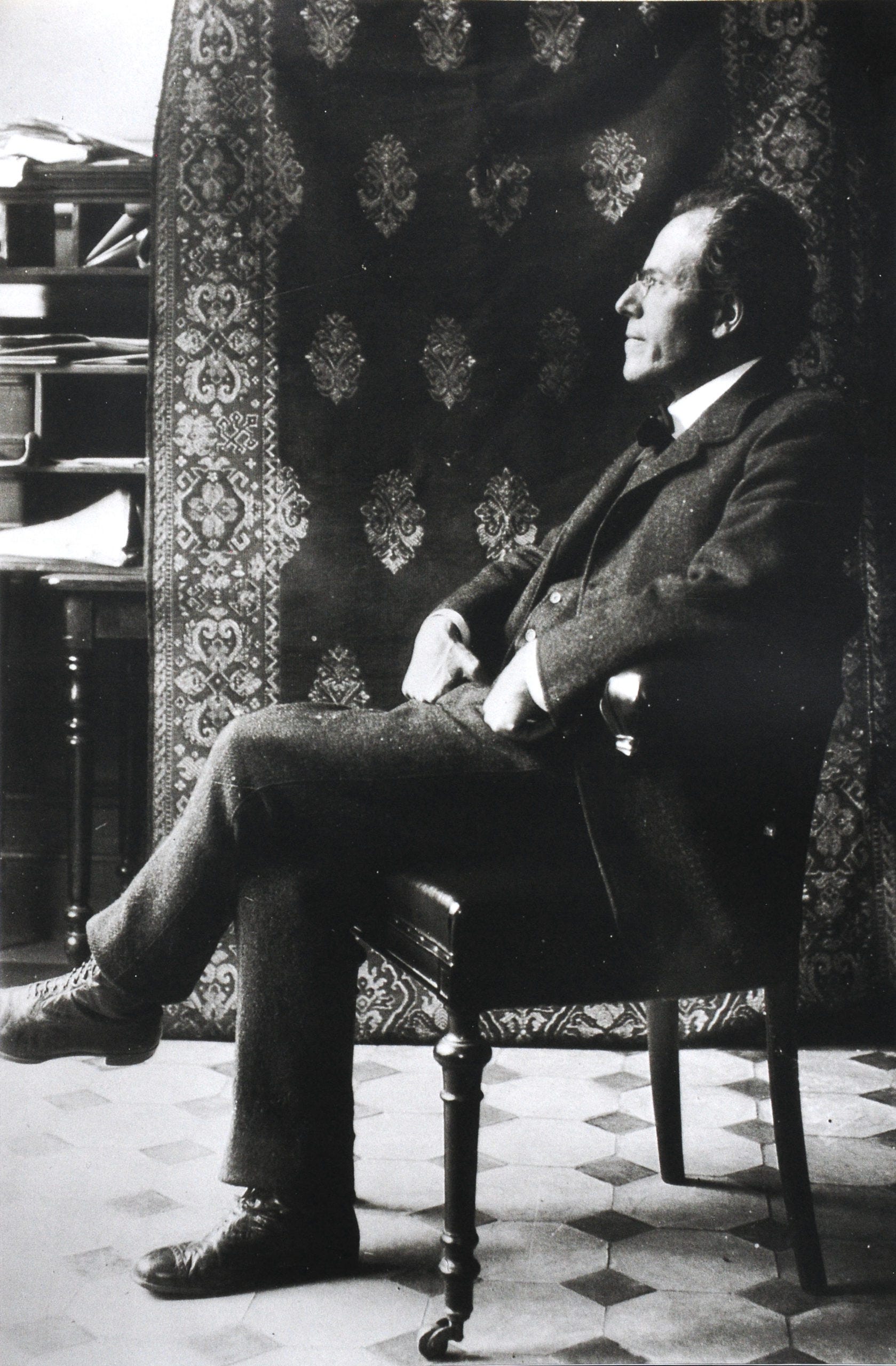
Before reading — or better, while reading — listen and follow the text: Bernard Haitink and the Concertgebouw Orchestra, with Janet Baker and James King (Philips, 1975).
Original German and English translations.
The work runs just over an hour.
I. The Song of the Earth
Gustav Mahler (July 7th, 1860-May 18, 1911) once said that a symphony must be like the world; it must contain everything. He spent his life trying to live up to that demand. Each of his major works opens a different world: man in nature, man with himself, man with love, with God, with death, with eternity. Some of these worlds end in affirmation, some in catastrophe, some refuse to give an answer at all. But all of them are about the same thing: the human condition, seen whole.
When Das Lied von der Erde came to Tel Aviv, I found myself telling people, perhaps a bit obsessively, that they must come. That this was not just another concert, not just another Mahler night, but something far rarer. From the outside, I’m sure it sounded borderline insane. Why this piece? Why such urgency? Why insist that it must be heard live?
A friend finally asked the most reasonable question imaginable:
Why? What is this work actually about? Why is it such a big deal?
I thought I could answer him quickly. A short voice note. A minute, maybe two. I pressed record and realised I couldn’t do it. Not because I lacked an answer, but because any honest answer would collapse under the weight of brevity. This isn’t a piece you summarise. It’s a work you arrive at after a life of questions, and even then, it resists compression.
If we had been sitting together with a beer, I might have spoken for an hour and still felt I’d only circled the edges. Instead, I stopped recording and said: “I can’t answer this in a voice note.” I need to write an essay.
So here we are.
Because what this work does, what Mahler achieves here, at the end of his life, is not just another beautiful or tragic statement. It is the most complete confrontation with life in all its forms: the grotesque and the tender, the drunken and the broken, irony and sorrow, farewell and exhaustion. And then, most importantly, the question of what comes after one has seen everything.
This essay is an attempt to follow that arc. Not to explain the music, but to understand why, after a lifetime of containing worlds, Mahler arrives here, and why this work offers, in music, the most serious answer I know to the question of what it means to live at all.
II. Containing Everything
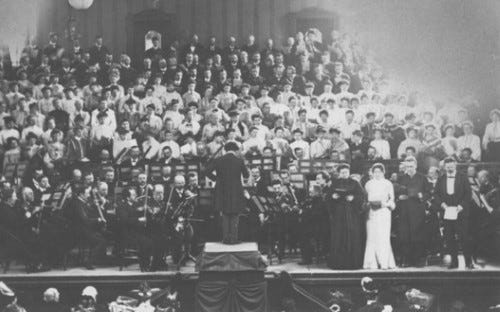
Mahler’s work as a composer can be understood as a single, relentless pursuit: the attempt to embody his conviction that a symphony must be like the world, that it must contain everything.
This was not a remark about length or orchestral mass. It was a metaphysical demand. To Mahler, a symphony was not a mood or a narrative but a world in itself, a place where existence in its totality could be confronted honestly: life and death, nature and humanity, irony and tenderness, faith and collapse.
Across his symphonies and song cycles, Mahler repeatedly constructs such worlds. Each work is self-contained, governed by its own laws, asking its own version of the same question: what does it mean to live, fully aware?
The clearest and most explicit realisation of this ambition is Symphony No. 3. Across six vast movements and almost two hours, Mahler attempts nothing less than a traversal of existence itself, from the elemental and metaphysical through nature, animals, humanity, angels, and finally love. It is the most literal expression of his belief that a symphony should contain the world.
Other works offer different answers. In the Second, death is answered with a literal resurrection, a radical, affirmative vision. In the Sixth, the hero is defeated by fate itself. In the Seventh, Mahler wanders through shadow and light without ever declaring what, if anything, has been resolved.
Each of these works presents a possible stance toward existence. None of them evade the question. But none of them, yet, strip it entirely bare.
That is what makes Das Lied von der Erde different.
This work is not a numbered symphony. Mahler called it A Symphony for Tenor, Alto (or Baritone), and Orchestra. It consists of six songs, divided between two solo voices, set to German texts adapted from ancient Chinese poetry. Even this premise is unusual: not a symphony with songs, and not a song cycle with orchestral accompaniment, but a symphonic world built entirely out of song.
The title itself matters. Das Lied von der Erde, The Song of the Earth. Not the song of a hero. Not the song of mankind. Not the song of redemption. The earth itself, its cycles, its seasons, its beauty, its indifference, its continuity.
Song, by its nature, is intimate. It is carried by a single human voice. It comes from breath, from the chest, from vulnerability. Unlike the public rhetoric of the symphony, song speaks inwardly. It is where emotion is no longer armoured.
This is not the world of the First Symphony, where a hero struggles against fate. Nor is it the luminous, childlike vision of the Fourth, where existence is filtered through innocence. It is something else entirely.
If one insists on a heroic image, then this is the hero after everything. After the struggles, after the battles, after the illusions have been exhausted. No longer proclaiming or conquering, but singing, singing about the life that was, coming to terms with its impending end, and slowly realising where it all leads.
Across these six songs, Mahler takes up the full range of existence: intoxication and laughter, loneliness and farewell, the darkness of life and the inevitability of death, but also tenderness, humour, beauty, and the persistence of the world itself. Nothing is excluded. Nothing is softened.
Here, Mahler stops composing worlds and starts standing inside one.
III. Facing the Abyss
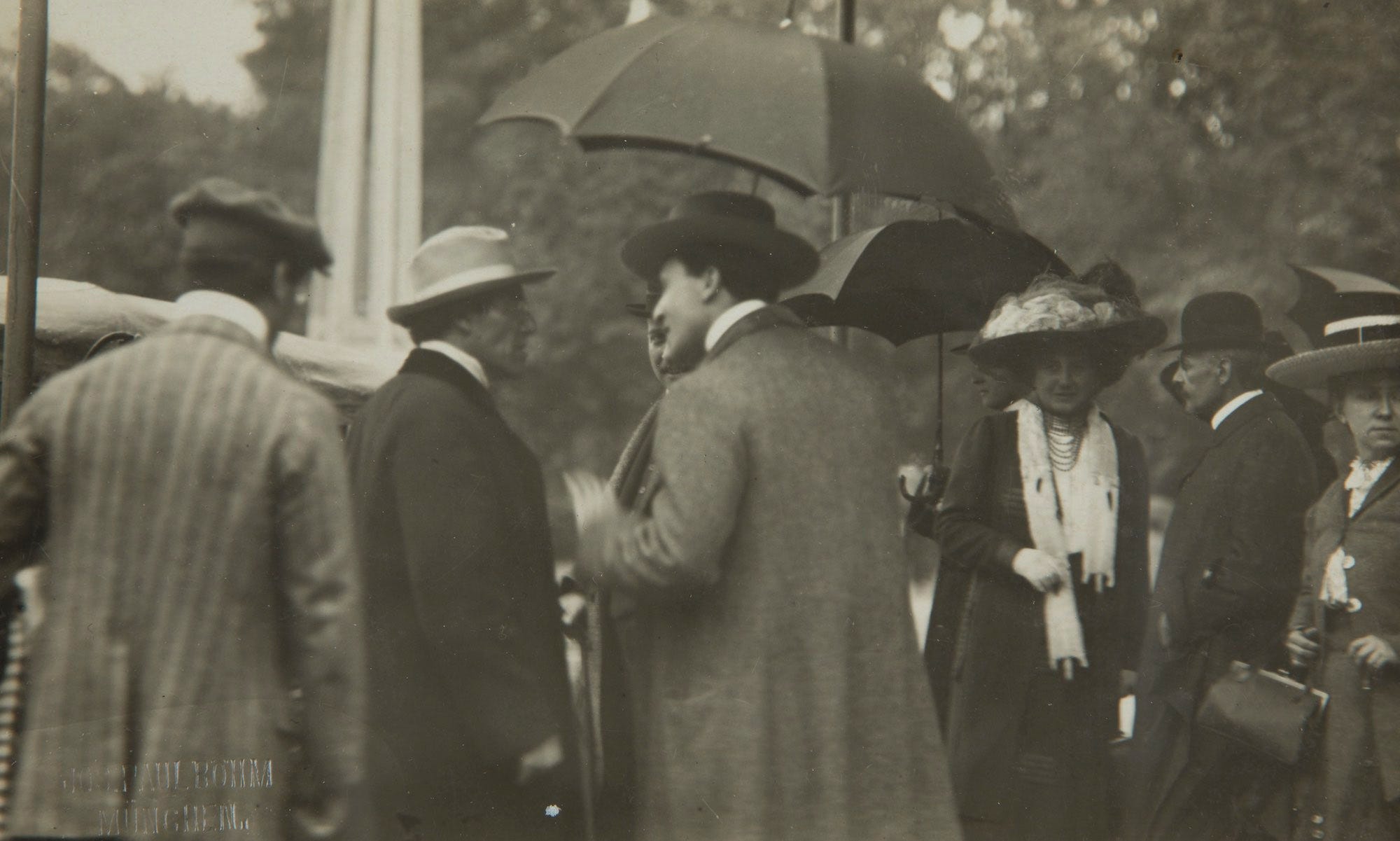
The work begins with a premise that is already unsettling: “Das Trinklied vom Jammer der Erde”, The Drinking Song of Earth’s Sorrow. It is, on paper, a sad song. And yet it is not sung in resignation or lament. Its energy is sharp, restless, almost defiant. There is motion, drive, even brightness on the surface, but it is a brightness undercut by darkness, never free of it.
This tension is essential. The figure at its centre is a drunk, not the romantic drunk, not the charming drunk, but the drunk as a philosophical posture: a man attempting to escape lucidity, to blur consciousness, to outrun what he knows too well.
And in a way, it foreshadows everything.
Because this opening song contains one of the most famous lines in the entire work, a line that does not merely pass by but arrests the listener:
Dunkel ist das Leben, ist der Tod.
Dark is life, dark is death.
What makes this line even more striking is that it does not exist in the original Chinese poem. Li Bai’s refrain says merely: how sorrowful. The darkness entered the German re-creation, and Mahler seized on it. He made it the axis of the song, returning again and again, and with each return, he screws it a semitone higher, so that the same words grew more desperate every time they are sung. The words he inherited. The dread is his.
Dark is life, dark is death.
It is deeply unsettling. Not simply because it is bleak, but because it implies a conclusion: if life is dark and death is dark, then perhaps numbness is preferable to engagement. Perhaps intoxication is wiser than lucidity. Perhaps we might as well drink.
And yet this is precisely where Mahler must not be misunderstood.
Mahler is not the man who would choose the goblet of wine over the world. That posture, the preference for escape over existence, is exactly what his entire life’s work stands against. This is the composer who insisted that the symphony must be like the world, must contain everything. A man committed to such totality does not retreat into intoxication. He never did.
So the opening song is not a confession. It is a confrontation. Mahler places the temptation to escape on the table in its most seductive form, and then rejects it from the ground up. The very act of composing this work, with its vast scope and merciless honesty, is already a refusal to blur consciousness. This is Mahler staging the argument against life, only to spend the entire hour dismantling it through creation.
The darkness, however, does not recede. It deepens.
The second song, “Der Einsame im Herbst” (The Lonely One in Autumn), abandons drunken bravado entirely and enters despair. It contains some of the most heartbreaking lines in the entire symphony:
My heart is tired…
I come to you, a trusted resting place.
Yes, give me rest.
I weep often in my loneliness.
Autumn in my heart lingers too long.
Sun of love, will you no longer shine gently, to dry up my bitter tears?
This is not irony. This is exhaustion. A soul pleading to be relieved of itself.
So the work begins with intoxication and then moves into desperation.
From there, it turns back toward youth, toward memory, toward beauty. That return is not accidental. It echoes Mahler’s lifelong obsession with childhood, innocence, and lost purity, a theme that recurs throughout his music. But the drunken figure returns as well. Life keeps reappearing in different guises: some grotesque, some tender, some cruel, some radiant. The work does not permit escape in any direction.
One could stop here and say: this is a profoundly dark work. One could easily say: this is depressing. This is pessimism. This is a man who cannot bear the world.
But that reading misses the point.
The darkness here is not indulgence, not nihilism wearing beautiful clothes. It is brutal honesty, brutal because it refuses to lie. This is how life appeared to the man who wrote it. And when one considers what Mahler actually lived through, it is entirely understandable that a human being might look at existence and say: dark is life, dark is death.
What matters is what comes next.
Mahler passes through drunkenness, sorrow, loneliness, fatigue, and still refuses to end there. He does not escape into wine. He does not escape into fantasy. He does not escape into metaphysics. He continues.
And this is where the contrast with Franz Kafka clarifies the stakes.
Kafka and Mahler share striking parallels: both German-speaking Jews from Bohemia, foreigners by birth, burdened by family, alienated from the cultures they inhabited. But their postures toward existence diverge radically. Kafka ordered his unpublished manuscripts burned. The novels, the diaries, the letters — nothing to be left behind. A withdrawal so complete it attempts to erase its own trace.
Mahler, by contrast, imagined conducting his works fifty years into the future.
That difference is not psychological. It is metaphysical. Kafka retreats from the world. Mahler insists on engaging it in full. Kafka prefers erasure. Mahler builds worlds meant to outlive him.
And this difference is already present in the opening song. The goblet of wine is offered and rejected. The darkness is named and then carried, not evaded.
Which is why the conclusion of the work cannot be darkness.
After everything that has been admitted, the grief, the exhaustion, the sorrow, Mahler ends not with negation, but with a statement so gentle and so clear that it feels almost impossible:
The beloved earth everywhere blossoms in spring and grows green anew.
Everywhere and forever blue are the horizons.
Ewig… ewig…
How could a work that begins with dark is life, dark is death end like this?
The darkness was real.
The honesty was merciless.
But the final word is not darkness.
The horizon remains.
Ewig.
IV. The Ninth, Defeated
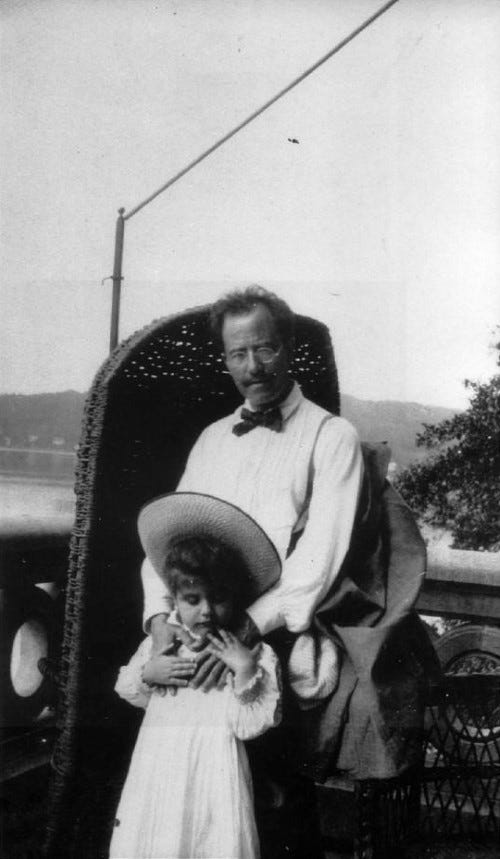
Mahler’s life was riddled with death, and with the fear of death, not as an abstract theme, not as a poetic fascination, but as something that pressed itself into the facts of his days. By the time this work was composed, death was no distant concept. In 1907, his daughter Maria Anna, Putzi, died. Soon after, he was told his heart was failing. The private catastrophes arrived together with the bodily warning. The horizon narrowed.
And then there was the Ninth.
Since Beethoven’s Ninth, there has existed a superstition in the musical world that a composer cannot outlive a Ninth Symphony. The so-called “curse of the ninth” was not a theory, not a scholarly argument, but a myth that hung in the air of late Romantic culture. Beethoven wrote nine and died. Schubert wrote nine and died. Bruckner died with his Ninth unfinished. And the story grew into a kind of musical fate.
Mahler took this seriously. He had every reason to. He was physically frail and was now formally diagnosed. And so he attempted a workaround.
After the Eighth, he composed Das Lied von der Erde, a work that is, in structure and scope, a symphony. Yet he did not call it Symphony No. 9. He titled it A Symphony for Tenor, Alto (or Baritone), and Orchestra. Six movements, each a song. Two solo singers, alternating worlds. It is not an obvious form: a symphony disguised as a song-world, as if the number itself were a trap.
But what a workaround it is.
Because this is not merely a ninth in the numerical sense. It is a ninth in the philosophical sense. It is Mahler confronting the very tradition that Beethoven’s Ninth established: the Ninth as the place where a composer presents an ultimate ideal, a culmination of his life's work.
Beethoven, deaf and broken and alone, proposed a breathtaking answer to the problem of existence: Alle Menschen werden Brüder. All men shall be brothers. Universal brotherhood. It is difficult to overstate how beautiful that is as an ideal, how noble it sounds as a response to suffering. Beethoven’s Ninth turns personal agony into a universal vision, and it is rightly treated as one of the great moral proclamations in art.
But Mahler lived in a different truth, and he lived it not as a philosophy seminar but as a Jew in Europe.
Mahler did not merely admire Beethoven’s Ninth. He inhabited it. He was its greatest interpreter, conducting it with urgency, conviction, and a depth of understanding that few before or since have matched. He grasped its moral and philosophical core not as ceremony, but as lived truth.
And yet, despite this communion, he was never allowed to belong to it.
Not because Beethoven would have excluded him, Beethoven would not have. But because the people would. The same society that celebrated the Ninth’s vision of universal brotherhood caricatured Mahler in antisemitic drawings and reminded him constantly that he was not fully one of them. So Mahler stood in the most painful position imaginable: conducting the hymn of brotherhood with unmatched devotion, while being denied brotherhood himself.
He could become the greatest conductor in Vienna and still be treated as an outsider. He converted to Catholicism in order to take the post at the Vienna Court Opera, and the antisemitic press still attacked him. His Europe was the same Europe that sang of brotherhood, and yet kept the Jew at the margin. The ideal was sung, but not applied.
So if Beethoven’s Ninth is the dream, Mahler’s Ninth question becomes unavoidable: what is the truth of that dream when history, and blood, and exclusion stand in the way of it. What does “brotherhood” mean when some men are antagonistic to the existence of others. What does it mean when a man can give Europe its deepest self-portrait and still not be admitted into the portrait.
This is where Das Lied von der Erde becomes not only a response, but a correction.
Its answer is not collective, not political, not universal in the sentimental sense, but brutally personal and at the same time cosmic. It says: yes, life is dark. Yes, death is real. Yes, there is despair. And yes, there is also laughter, intoxication, youth, beauty, and tenderness. Everything is here. Everything matters.
But what outlives you is not your body. Not your suffering. Not your social acceptance. Not the approval of the world. What outlives you is creation. Art. The song itself.
That is why the line Dunkel ist das Leben, ist der Tod matters. It is the abyss stated plainly. But the final word is not the abyss. The final word is the horizon.
Die liebe Erde allüberall blüht auf im Lenz und grünt aufs neu.
Allüberall und ewig blauen licht die Fernen.
Ewig… ewig…
The earth blossoms. It grows green anew. The horizons are forever blue. Forever.
This is the true answer to the Ninth dilemma. Not “all men are brothers.” Not a utopia, not a plea. The real brotherhood, the only brotherhood that does not betray, is the brotherhood of creators across time. It is the communion between a living mind and the work of another living mind, separated by a century, and yet intimate. Art is the only place where we can be brothers without pretending.
And perhaps that is why there is a final symbolic cruelty that fits the entire logic.
Beethoven never heard his Ninth in the way a composer should, because he was deaf. Mahler never heard Das Lied von der Erde performed in his lifetime. It is as if the work itself insists on its own meaning: this does not exist for the comfort of the composer. It exists for the future. It belongs to eternity.
It is like Moses seeing the Promised Land and not entering. Not because the land is false, and not because the mission failed, but because the mission was not to rest inside it. The mission was to make it real, to point to it, to bring others to it.
Mahler created the horizon. He did not need to stand inside it.
V. The Outsider
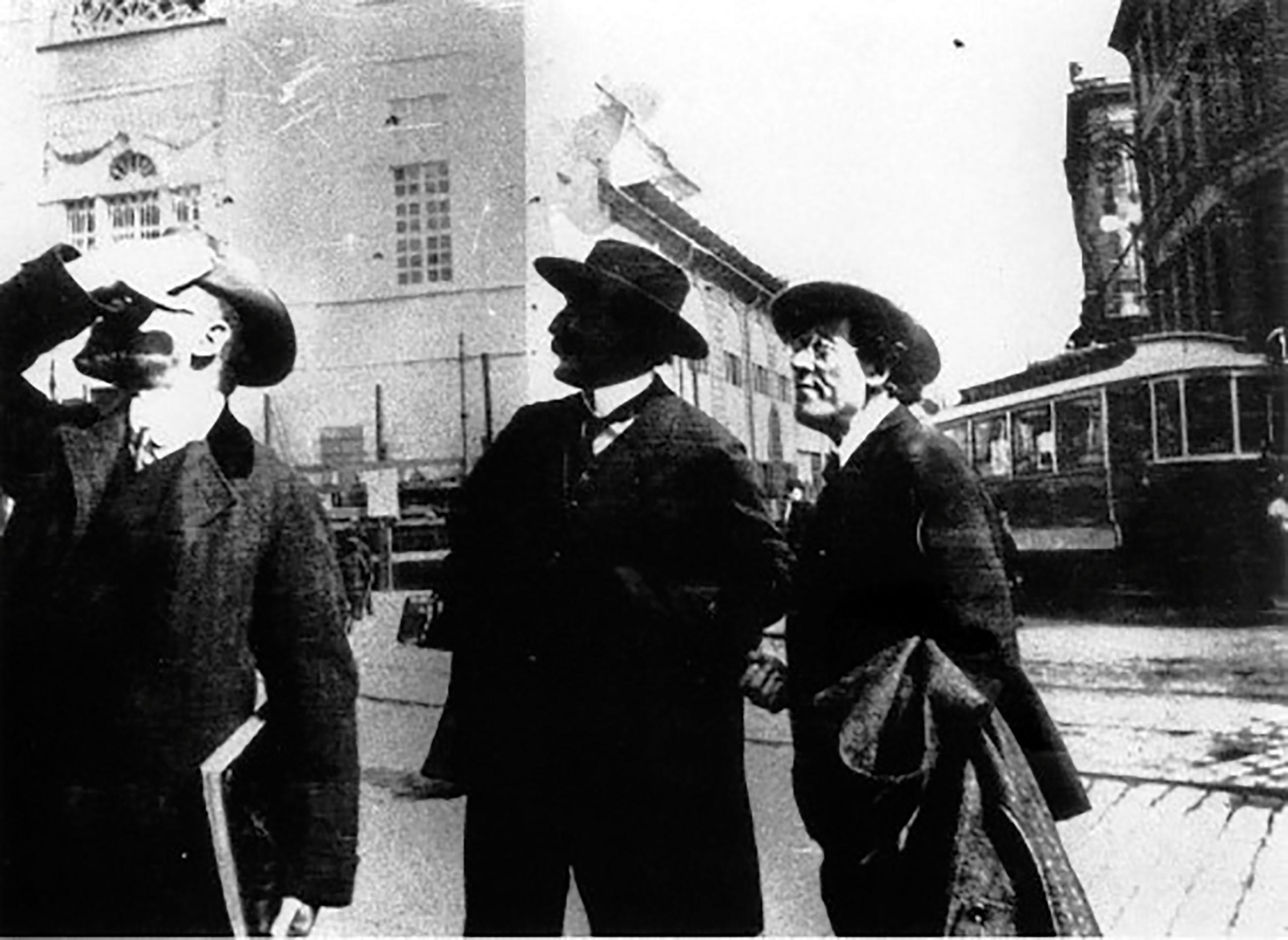
Das Lied von der Erde begins with a premise that is, even by Mahler’s standards, unusual. Six movements. All songs. Texts drawn from ancient Chinese poetry, filtered through German translations, and then reshaped by Mahler himself through crucial additions of his own.
There are few precedents for such a work. It is neither a song cycle nor a symphony in the traditional sense. It is a symphonic world constructed entirely out of poetry and voice.
This, however, is not accidental.
Song was always central to Mahler’s thinking. His earliest works were Lieder and song cycles. Songs migrate into his symphonies again and again, in the Second, the Third, the Fourth, and elsewhere, until, here, the process reaches its culmination. The symphony does not contain songs. It is a song.
But the choice of texts matters just as much as the form.
Mahler was, as we have seen, an eternal outsider, and it is no surprise that he found resonance not in the canonical poetry of his own culture but in voices standing at a distance from it: ancient Chinese poems of impermanence, seasons, intoxication, farewell — texts already written from the edge of things. They do not explain the world. They observe it.
The orchestration completes the philosophy. The orchestra is enormous, and yet it almost never asserts itself fully. A mandolin appears. A celesta. Long stretches unfold as chamber music, the voices exposed, never protected by mass. They do not proclaim; they speak.
Nothing here hides behind scale.
This restraint is precision, not modesty. Mahler strips away grandeur because grandeur would lie. What remains is the human voice, alone against time, speaking in a language borrowed from afar, because only an outsider’s language could say what needed to be said.
VI. Forever Blue Are The Horizons
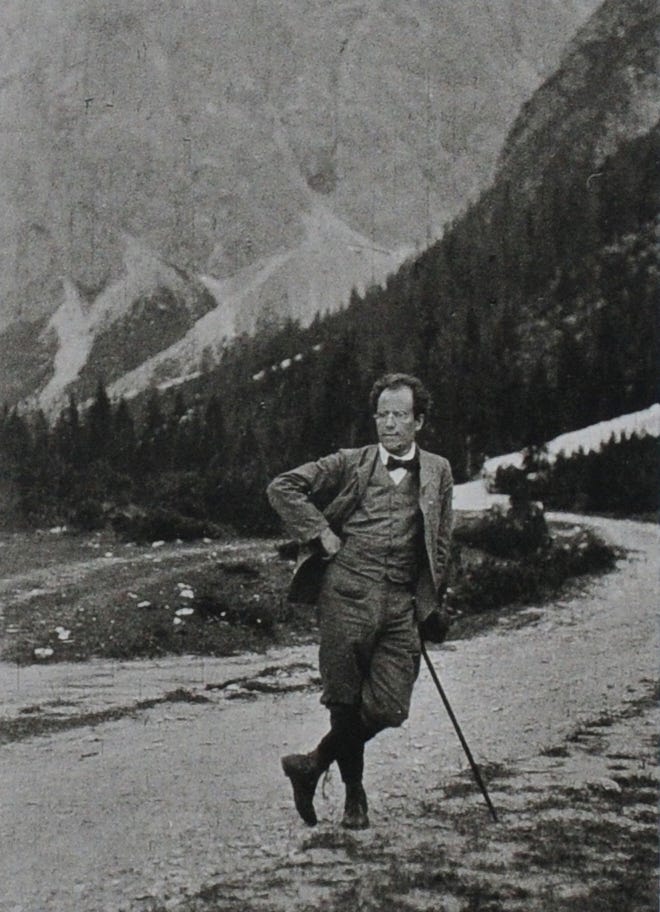
The Song of the Beloved Earth.
Der Abschied begins, and something immediately changes.
Not gradually. Not rhetorically. Instantly.
The world of sound is different.
This is no longer a song among songs, no longer part of a cycle that moves forward in time. This is a suspension. A widening. A final opening. What follows is by far the longest movement of the work, often close to thirty minutes, and the work knows exactly what it is doing, unfolding this way. It does not rush. It does not summarise. It lingers because this is the core.
From the very first bars, one understands: this is not a farewell in the ordinary sense. It is not tragedy, not despair, not resignation. It is something far more difficult and far more truthful.
The text speaks of the earth.
But not the earth.
The beloved earth.
Die liebe Erde allüberall
The beloved earth everywhere
That word matters more than anything else in this work.
Not the earth as a burden.
Not the earth as exile.
Not the earth as something to be escaped.
But the beloved earth is the one that blossoms, that grows green again in spring, that remains beautiful despite everything done upon it. Mahler lingers on this idea the way the music itself lingers, stretching time until it nearly dissolves. There is no sentimentality in it, only conviction.
And it is here that something essential becomes clear:
This is not a man who hates life.
This is not a man who wishes to withdraw from the world.
This is not the drunk from the opening song who would rather choose wine over existence.
Mahler rejects that posture completely.
He was a man obsessed with the world in its entirety. He insisted that the symphony must be like the world, that it must contain everything. He loved nature, loved sound, and loved creation with an almost childlike intensity. One cannot look at the image of Mahler in his composing hut, listening, absorbing, alive to every sound of birds, wind, and forest, without understanding this. There is no bitterness there. No resentment toward existence itself.
Whatever cruelty he endured came from human choice, not from the earth — and the music keeps that distinction absolutely: nowhere in this work is nature accused. The earth is only ever die liebe Erde.
And so Der Abschied does not deny darkness. It has already acknowledged it. The earlier movements have done that work thoroughly: drunkenness, despair, loneliness, fading youth, impermanence. The work does not pretend otherwise. But it refuses to let darkness have the final word.
Instead, Mahler offers something far more radical.
The text says the earth endures. But the lines that say so are not in the ancient poems, and they are not in Bethge’s German either. Mahler wrote them. The poems he found say: the earth continues without you. The words he added turn that indifference into song. The farewell is written into a found text by the very self it describes as dissolving.
The music says what the philology says. Ewig returns again and again, each repetition dissolving further, and the final chord refuses to resolve – a sixth is added, the harmony left suspended. A work about ending that will not close. If dissolution were the whole meaning, the music would end. Instead, it holds the door open.
And there is the plainest evidence of all: the work exists. A man who had truly concluded that the self simply dissolves into indifferent nature does not spend his final strength building a monumental score, meticulously prepared for orchestras he would never hear. Kafka reached that conclusion and gave the matching instruction: burn it all. Mahler wrote out the parts.
What remains is not the body.
Not the struggle.
Not the suffering.
What remains is creation.
This is why the ending does not resolve in triumph or collapse. It dissolves. The voice fades into the orchestra. The orchestra thins into the atmosphere. Time loosens. The sound itself seems to withdraw from weight, from gravity, from assertion. Nothing pushes forward anymore. Nothing needs to.
And then the word appears.
Ewig.
Forever.
Repeated. Not proclaimed. Not shouted. Repeated as if tested. As if discovered anew each time.
Forever…
Forever…
The horizon is forever blue, not because life is easy, not because death is defeated, but because creation outlives the individual. Because art persists. Because song remains when the singer is gone.
Mahler never heard this music performed.
Like the deaf Beethoven before him, he stood at the threshold of his own testament and never entered.
And that is why this farewell is not defeat.
It is completion.
Mahler’s answer is not universal brotherhood as a social fact. It is brotherhood through creation. Through music. Through works that speak across time without asking permission.
That is why this is Das Lied von der Erde, not a song about the earth, but the earth itself singing through art. Singing beyond the life of its creator. Singing beyond grief. Beyond exile. Beyond death.
The beloved earth blossoms again.
And again.
And again.
Forever.
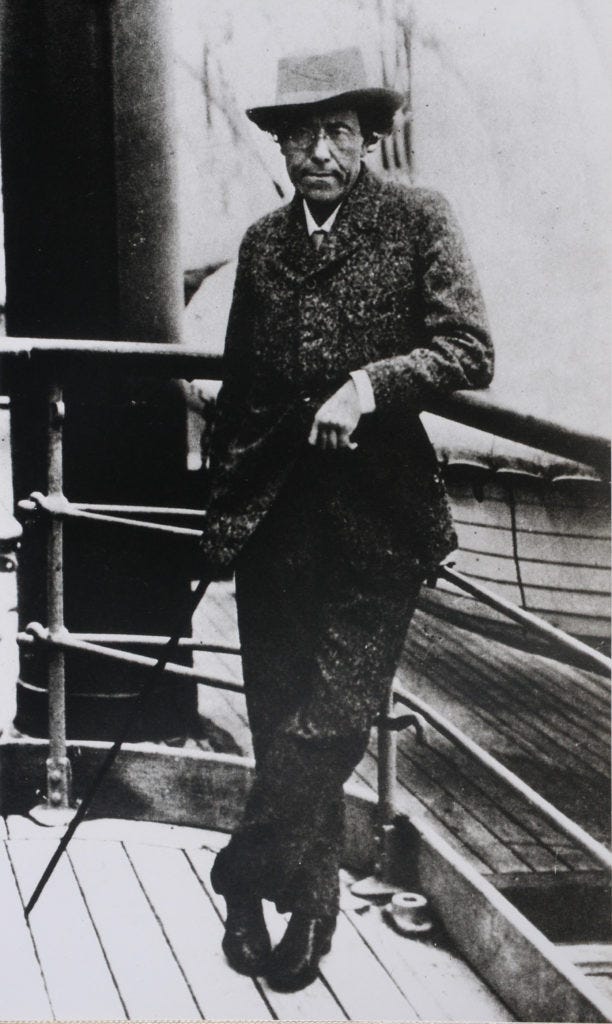
All photographs via the Mahler Foundation (mahlerfoundation.org).
If you enjoyed Philosophy: I Need It and want to see more, you can support my work by buying me a coffee or becoming a monthly supporter.
Every contribution makes a real difference. Thank you!

And if you’re looking for something longer, my debut novella, The Weight of Silence, is available on Amazon. Get your copy here.
This is lovely writing. It contains much speculation and second-guessing about Mahler's thoughts and intentions as happens with so much writing about the composer, even with the personal biographical material available to us. Yet if I may, do a bit of the same. Very little is made of Mahler's Jewish heritage when regarding Das Lied in scholarship. His view of life and its cessation (if we follow your argument) can and should be traced to his tentative relation to Torah and the Jewish traditions. Since Torah is more concerned with how we should live than with the nature of death, Mahler can be seen to allow that death is merely the cessation of life, that the world will continue as it has for millennia. He may have been preoccupied with resurrection early in life (in itself, only a later development in Jewish thought). But by the time we arrive at Das Lied, he has understood that the world is not a prison or an illusion but a fundamental of God's creation - in Torah, it is an ordered creation of which man is a revelation of his wisdom. In agreement with your premise, the six movements of Das Lied act as examinations of the human mystery, the Fall and Death's role in life before arriving at the word, ewig. His litany of how we live (drunkenly, lonely, in silliness and vanity, etc.) finally affirms the beauty of the world in which we live, that we must, in the end, depart. This is Jewish wisdom and you arrive at this as well.
The Venice Biennale jury resigned en masse saying it was doing so in protest against inclusion of national exhibits from countries whose leaders have been issued warrants of arrest for crimes against humanity issued by the ICC, which includes Israel. That is where art has led to in the current climate, In other words, death, celebrated by the guardians of artistic virtue. There may be the earth to celebrate, but certainly not the human race.