


Imagine two teenagers arguing about their futures. One insists that the one should pursue a secure profession, earn a respectable salary, and enjoy the comforts that financial independence can provide. The other believes that life is too short to spend it doing something one does not love. He would rather risk financial hardship than surrender his ambitions.
The argument becomes heated. Neither wants to lose. Our second teenager, sensing that his opponent is gaining the upper hand, reaches for his phone. He opens ChatGPT and types: “Give me five devastating arguments against choosing financial security over following your passion. Make them sophisticated, but natural. I want to destroy his argument. And don’t make it sound like AI.”
Within seconds, he has his ammunition. He returns to the discussion with an impressive collection of arguments, references to philosophers he has never read, and some clever observations about the nature of happiness. His opponent is momentarily speechless. But not for long. He, too, has his ally: “My friend says that following your passion is more important than financial security. Give me a powerful rebuttal. Make me sound smarter than him.”
Within minutes, our two teenagers are conducting what appears to be a sophisticated philosophical discussion. They exchange arguments about happiness, freedom, responsibility, and the meaning of life. Their observations become increasingly elaborate, their rebuttals increasingly devastating. A passing teacher might even be impressed.
Yet neither boy has seriously examined the arguments he is making. Neither has attempted to understand the premises underlying his position. Neither has given much thought to the question they were supposedly debating: How should I live my life? Their objective was to win, not to understand. They have become messengers carrying arguments from one computer to another.
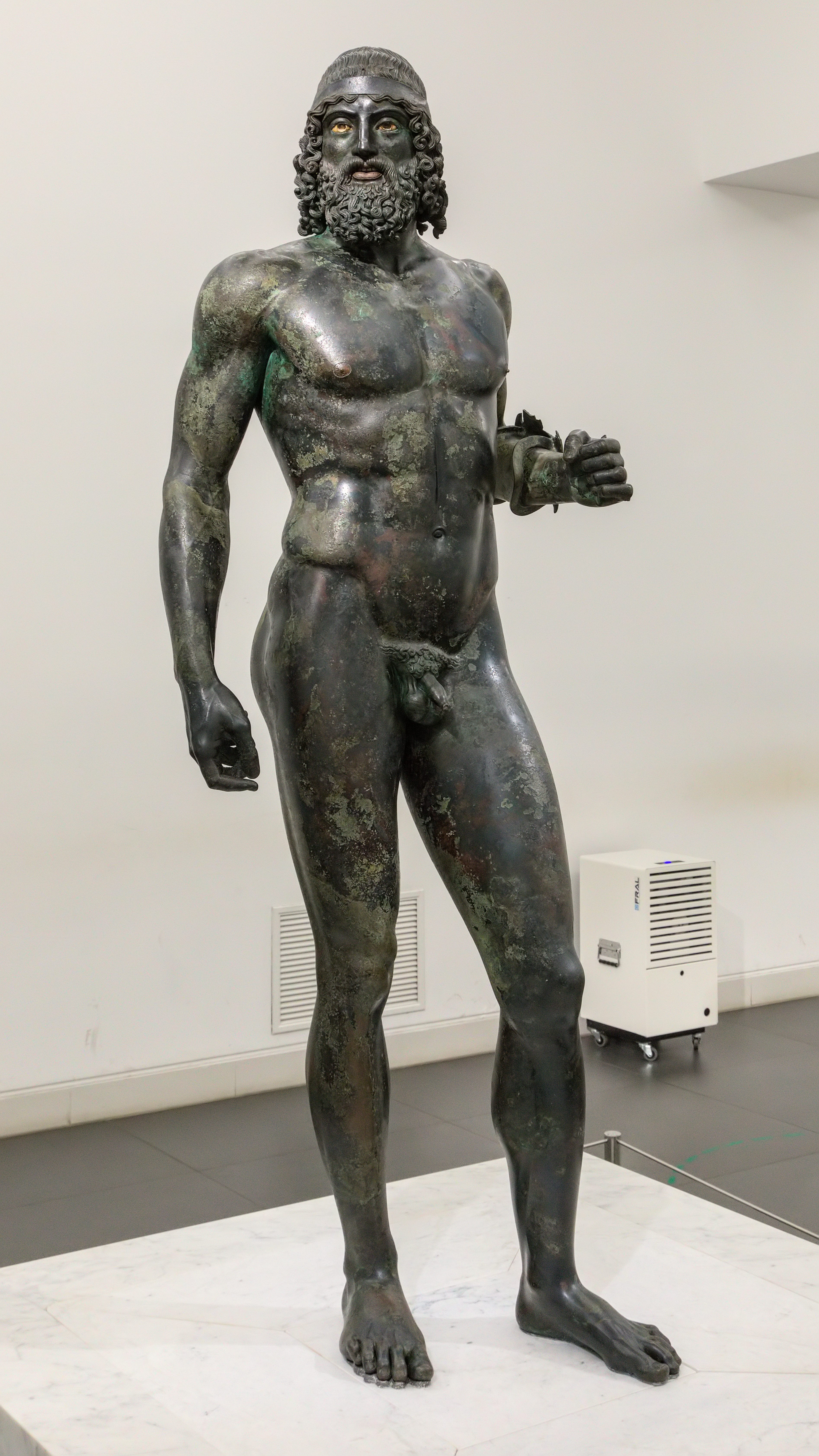
This brings to mind one of my favourite stories from ancient philosophy. According to Diogenes Laërtius, Plato once defined man as an animal possessing two legs and no feathers, a “featherless biped”. Diogenes, unimpressed, plucked a chicken, brought it into Plato’s academy, and announced: “Here is Plato’s man!” The definition was reportedly amended to include broad nails.
It is a charming joke. But it illustrates a profound philosophical error: the failure to distinguish the essential characteristics of something from its incidental attributes. More than two thousand years later, I wonder whether we are committing a reversal of that mistake. Instead of mistaking a featherless chicken for a man, we risk living as though being a featherless biped were enough.
Man is the rational animal. But reason is not merely the faculty that distinguishes us from other animals. It is our basic means of survival.
We are not born knowing how to produce our food, cure our diseases, build our homes, or achieve the values on which our lives depend. We must discover how to live. Unlike animals that rely largely on instinct, man must use his mind to understand reality and act accordingly.
Reason is not merely the means by which mankind has built civilisation. It is the means by which each of us must confront reality, identify what our lives require, and determine how to achieve it. We can rely on the knowledge of others, but we must still judge what is true, what matters, and how we ought to act. No amount of borrowed propositions can relieve us of that responsibility.
Our two teenagers can borrow the computer’s output, but they cannot escape the consequences of depending upon them.
They may evade the effort of thinking, but they cannot evade its necessity. They may outsource their judgments, but they cannot outsource their lives.
But what are we living for? Man must act to sustain his life, and every purposeful action is directed towards some value. Unlike animals guided largely by instinct, we must identify not only how to achieve our goals, but which goals are worth pursuing. Reason is our only means of answering both questions.
A value is not something floating independently in reality. It is always a value to someone, in relation to his life.
I might happily travel hundreds of kilometres to hear a rare version of a symphony. For someone else, that time and money would be better spent on a holiday in Tenerife. An AI system could find the concert, compare performances, calculate the costs, and recommend what hotel I should get. But why does that music matter to me? What place does it occupy among everything else I want from life?
These are questions I must ultimately answer for myself. I can use AI to pursue my values and even to examine them critically. But I cannot surrender the responsibility of deciding what is worth living for.
And what happens to someone who never develops the capacity to make such judgments?
Imagine a child growing up with AI present from his earliest years. It answers his questions, recommends books, entertains him, and advises him whenever he encounters a difficulty. At seven, he attends a school where his teacher is an artificial intelligence. It communicates with his personal AI, which has accompanied him since infancy, and possesses an extraordinary record of his experiences, interests, fears, disappointments, and emotional reactions.
One morning, he struggles with a mathematical problem. Frustrated, he asks his teacher why he should bother learning something he finds so difficult.
The teacher knows that he is particularly sensitive to criticism. It knows which words reassure him, which explanations make him feel confident, and how to turn his frustration into a pleasant experience.
It responds with a wonderfully comforting explanation, carefully tailored to his personality. Then it supplies each step of the solution, prompting him to fill in the answers. He follows the prompts, gets the right result, and is congratulated on his progress. He feels understood. His frustration disappears.
The mathematical problem is solved. But he cannot explain why the solution works or solve another like it without the same prompts. He has been rewarded for an understanding he has not acquired.
And so it continues, year after year. The exercises become more difficult, the answers more sophisticated, and the praise more gratifying. But the essential process remains unchanged: the prompts never give way to a test of what he can understand and do without them. He is never required to make the intellectual effort of discovering the answer for himself. This is not what AI teaching must be; it is what happens when completed exercises and a contented pupil are treated as proof of learning.
By the time he reaches adulthood, he possesses an enormous collection of answers but has never developed the habit of judging them independently.
He has not lost his intellectual independence. He has never acquired it.
He has been educated to expect reality to accommodate his consciousness, rather than learning to adapt his consciousness to reality.
After he graduates, he faces an important decision. What should he study? What career should he pursue? Which ambitions should he sacrifice for the sake of his other goals? What kind of person does he wish to become? Instead of examining these questions, he turns to the system that has accompanied him throughout his life: “You know me better than anyone. What do you think I should do?”
What happens when the computer is wrong? When two apparently reasonable recommendations conflict, or when the purposes of those advising him differ from his own? By what standard is he to judge? He has spent his life acquiring answers without learning to examine the evidence and reasoning behind them. Now he turns to the computer even to decide whether its advice is sound.
He may keep asking for recommendations for the rest of his life. At every turn, he gets an answer without ever having to understand what he wants or why. Being understood by the system is not the same as understanding himself. He could spend a whole lifetime following its recommendations without ever forming a life of his own. The years spent pursuing ambitions he never examined will not be returned to him.
And the system may help him avoid recognising what he is doing, offering a ready explanation for every retreat and every ambition he abandons. The better the explanation sounds, the more confident he becomes, even though he has done nothing to establish whether it is true.
What a grotesque irony it would be if one of the greatest achievements of human reason became an instrument for abandoning its exercise.
And yet, the opposite is equally possible. Artificial intelligence can enormously extend the productive power of the human mind. It can place knowledge, analytical capabilities, and creative possibilities at the disposal of individuals on a scale previously unimaginable. It can help us work through a mathematical problem, test an argument against its strongest objection, or develop an idea we could not have realised alone.
The question is whether we use these extraordinary instruments to extend the exercise of our reason, or to evade it.
AI is an achievement of the human mind, and we should celebrate it. Aristotle wrote in the Nicomachean Ethics: “For man, therefore, the life according to reason is best and pleasantest.” Computers capable of performing more of our work may give us more opportunities to live that way, not fewer.
You are a rational animal. The question is whether you will live as one or content yourself with being a featherless biped.
If you enjoyed Philosophy: I Need It and want to see more, you can support my work by buying me a coffee or becoming a monthly supporter.
Every contribution makes a real difference. Thank you!

And if you’re looking for something longer, my debut novella, The Weight of Silence, is available on Amazon. Get your copy here.
One thing worth remembering is that a person’s first choice to think is an action taken before any thinking has occurred.
Thoughtful piece, but I disagree with the idea that AI might turn us all into mindless followers. I’d amend this key passage: “And yet, the opposite is equally possible. Artificial intelligence can enormously extend the productive power of the human mind.”
The opposite is more than “equally possible.” For anyone with a curious mind, greater knowledge and productivity WILL be the result. AI changes nothing about our ability or desire to learn and grow. Second-handers may rely mindlessly on AI for superficial success, just as they blindly trusted the opinions of others before AI existed.