

I. The Wrong Scandal
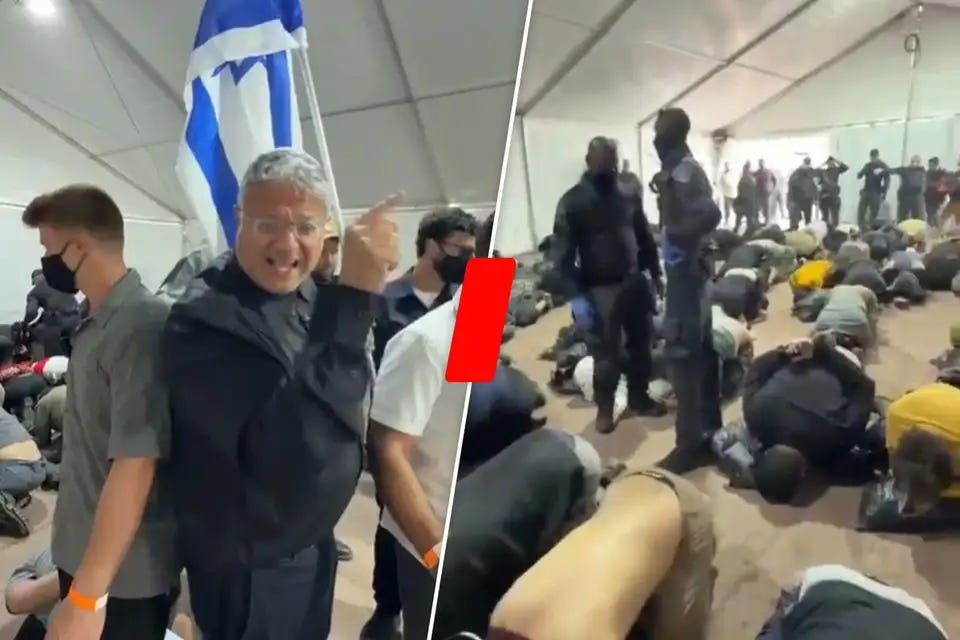
A flotilla of foreign activists sailing toward Gaza is by now a familiar ritual. Announce a humanitarian mission. Ignore every warning. Force Israel to stop you. Present yourself to the world as a victim.
The great scandal, we are told, is that the Minister of National Security, Ben-Gvir, appeared at the scene with an Israeli flag and shouted at the detained participants. He damaged Israel’s image. He harmed Hasbara.
That, apparently, is the horror.
Not that hundreds of foreign nationals attempted to breach an active wartime blockade. Not that they came to assist Israel’s enemy. Not that Israeli soldiers had to risk themselves in this theatre. Not that Israel will release them, fly them home, and allow their governments to condemn us for the privilege.
No. The scandal is Ben-Gvir’s words.
This tells us something rotten about the Israeli perspective today. We are not truly concerned with sovereignty, deterrence, or even Hasbara.
The best message Israel could send is very simple: if you invade our war zone, you go to jail. Not for a photo-op. Not until your embassy complains. You go to jail.
That would be good Hasbara. Because the best PR is not better rhetoric or style. It is a country that behaves as if its borders, its soldiers, and its war matter.
The scandal is not that Ben-Gvir stood there with a flag. The scandal is that the State of Israel will not do what that flag is supposed to mean.
II. This Was an Invasion

This was not a humanitarian mission. This was not peaceful activism. This was an invasion.
Israel is fighting a war in Gaza. There is an active naval blockade. The warnings were clear. They came anyway, dozens of ships, hundreds of foreign nationals, cargo Israel cannot verify, all sailing toward an active war zone under the flag of the enemy Israel is fighting. Their destination was announced. Their purpose was announced: to break Israel’s control of the sea and assist the society from which October 7th was launched.
A rational country does not need to know every name on those boats to understand what that means. It knows enough.
And this is now a ritual. Activists announce their intention to breach the blockade. Israel warns them. They continue, not despite the confrontation, but because of it. Confrontation is the point. The cameras are the point. The diplomatic pressure is the point.
So Israel stops them. Brings them to shore. Processes them. And almost immediately sends them home.
No consequence.
No message to the next ship.
Worse, Israel does not even challenge the moral premise. When asked to justify the interception, Israel says: If you truly want to send humanitarian aid to Gaza, there are proper channels. But that is already a surrender. The question is not whether they chose the wrong logistical method. The question is why anyone has a moral right to supply Israel’s enemy during wartime.
Israel does not answer that question. It manages the paperwork of its own moral defeat.
III. Israel Built the Runway
It is not even clear that Israel objects to these flotillas in any serious moral sense.
“Condemnation” is too strong a word for what actually happens. Condemnation implies judgment. It implies moral clarity. It implies that the thing being condemned is regarded as intolerable.
But Israel does not treat the flotilla as intolerable.
It treats it as paperwork.
The ships are intercepted. The activists are processed. The embassies are notified. The statements are issued. The diplomats complain. The invaders are flown home.
That is not moral condemnation.
That is bureaucracy.
And the reason for this bureaucratic attitude is obvious: Israel has already accepted the moral premise of the flotilla.
The activists say Gaza must be fed, sustained, relieved, and rescued. Israel, throughout this war, has acted as if it agrees. It has allowed enormous quantities of aid into Gaza. It has accepted responsibility for the welfare of the enemy society from which the war was launched. It has treated Gaza’s suffering as Israel’s burden to manage, soften, explain, and apologise for.
That single concession justifies every flotilla.
If Israel must feed Gaza, why shouldn’t foreign activists sail to feed Gaza? If Israel must keep the enemy society alive, why shouldn’t the enemy’s supporters try to do the same? If Israel itself treats aid to Gaza as a sacred necessity, why should anyone be shocked when hostile activists turn that premise into a naval confrontation?
The flotilla is not a rebellion against Israel’s moral policy.
It is Israel’s moral policy, sent by water.
This is the Palestinians’ strategy in its purest form: start a war, hide behind so-called civilians, turn civilian suffering into a weapon, and count on Israel to accept responsibility for the consequences. Count on Israel to feed the population, create humanitarian corridors, pause, explain, apologise, and delay. Count on the world to blame Israel for a war Israel did not start.
And Israel has accepted the role.
Even after October 7th.
That is why the war has dragged on. Not because Israel lacked power, but because it lacked the moral willingness to impose consequences on the enemy society that made this war possible. War is not a game in which the aggressor may massacre civilians, retreat behind his own civilians, and then demand that the victim feed, protect, and sustain the territory from which the attack came.
Civilian populations of evil regimes suffer in war. That is not a scandal. That is one of the awful consequences of belonging to a society that wages catastrophic war and refuses to surrender. Germans suffered in World War II. Japanese civilians suffered in World War II. Civilians have always suffered when their societies start wars and lose them.
The responsibility for that suffering lies with the aggressor.
It lies with the regime that started the war, with the society that sustained it, and with the leaders who chose destruction over surrender. It does not lie with the country defending itself from attack.
If Gaza is suffering, the moral responsibility belongs to Gaza’s rulers and to the society that allowed itself to become the base of a war of extermination against Israel. If Gazans did not want the consequences of war, they should not have launched, supported, celebrated, or tolerated a war. And if they want those consequences to end, the path has always been simple: surrender, release the hostages, and end the aggression.
But Israel has refused to allow this causality of justice to stand.
Instead of saying, “You started this war, and you bear its consequences,” Israel has acted as though Gaza’s suffering is Israel’s responsibility to manage. That is why the war has not been won. A war cannot be won while the victim accepts moral responsibility for the suffering of the aggressor.
But in Israel’s case, the world demands something unprecedented: that the victim of aggression continue sustaining the aggressor’s society while the war is still being fought.
And Israel, instead of rejecting that obscenity, has accepted and maintained it.
So the flotilla should not surprise us. It is the logical result of Israel’s own conduct. A state cannot spend years proving that ‘humanitarian’ blackmail works and then act shocked when more blackmail arrives. It cannot feed the premise and complain about the conclusion.
Israel did not lose the argument when the flotilla reached the sea, or when Ben-Gvir waved a flag at them.
It lost the argument when it accepted that Gaza was entitled to be fed by the country it attacked.
IV. Foreign Citizenship Is Not Immunity

The reaction from the world was predictable.
South Korea was upset. Turkey was upset. Italy was upset. Even the US ambassador was upset. Foreign governments demanded apologies, summoned Israeli diplomats, requested the immediate release of their citizens, and spoke as though Israel had committed some shocking violation by detaining foreign nationals who had just attempted to breach its wartime blockade.
But again, the revealing thing is not that the world condemned Israel.
The revealing thing is that Israel accepted the role of the accused.
Foreign nationals are arrested in foreign countries all the time. Israelis know this very well. Israelis have been arrested abroad, tried abroad, imprisoned abroad, and released only after long and difficult diplomatic efforts, if they are released at all. No Israeli in his right mind believes that an Israeli passport is immunity from foreign law.
If an Israeli commits a crime in South Korea, Italy, Turkey, France, Russia, Peru, or the United States, he does not become untouchable because he is Israeli. His government may request consular access. It may ask for humane treatment. It may intervene diplomatically. But it does not get to declare that he must be released simply because he carries the right passport.
So why does this principle disappear when the crime is committed against Israel?
Why does a South Korean passport, an Italian passport, a French passport, a Turkish passport, or a Swedish passport suddenly become sacred when its holder joins an invasion of Israel’s war zone?
A passport is not a license.
Consular protection is not diplomatic immunity.
Foreign citizenship is not innocence.
These people were not tourists who drifted into the wrong port. They joined a hostile expedition toward an active war zone. They were warned not to come. They came anyway. Their purpose was to breach Israel’s blockade and assist the enemy territory from which Israelis were massacred, kidnapped, and bombarded.
That is not a consular inconvenience.
That is a serious offence.

And yet, when their governments complain, Israel’s first instinct is not outrage. It is embarrassment. Our own officials rush to condemn Ben-Gvir more forcefully than they condemn these foreign citizens who came to violate our sovereignty. Our commentators are upset with the video, and say that this is a “Hasbara harakiri”. The public debate is about Israel’s manners, not the invasion itself.
This is the true humiliation.
The world says: How dare you detain our citizens?
Israel should answer: How dare your citizens attempt to invade us?
That is the question. Why was your citizen there? Why did he sail to help Israel’s enemy? Why did he ignore Israel’s warnings? Why is your first instinct to condemn Israel rather than apologise to Israel? Why should Israel explain itself to you when a citizen joined an operation against Israel during wartime?
South Korea is a perfect example.
South Korea reportedly objected to Israel’s detention of its nationals, while several governments, including Italy, Turkey, and other European states, also criticised Israel’s handling of the flotilla activists. Israel detained around 430 activists from more than 40 countries after the flotilla was intercepted, and Italy, South Korea, Turkey, and others criticised Israel or summoned diplomats over the incident.
But of all countries, South Korea should know better.
South Korea lives under the threat of an enemy regime that openly menaces its existence. It understands borders. It understands the importance of deterrence. It understands the meaning of military zones, hostile infiltration, and the danger of allowing enemies and their sympathisers to test the limits of sovereignty.
Would South Korea tolerate an Israeli activist sailing into a Korean security zone to assist North Korea under the banner of humanitarianism?
Of course not.
It would arrest him. It would interrogate him. It would treat the matter as a security incident. And it would be right.
No sane Israeli would expect Seoul to apologise for that. No sane Israeli would say that an Israeli passport grants the right to interfere in South Korea’s conflict with North Korea. If anything, Israel would be expected to apologise to South Korea for the conduct of its citizens.
So why is Israel denied the same respect?
If South Korea wants its citizens released, it should request that release as a diplomatic favour. It should not denounce Israel for enforcing its blockade. And if Seoul, or Ankara, or Rome, or even Washington DC, if these nations want to turn these activists into a diplomatic crisis, then Israel should not be afraid of that confrontation.
Let it be a confrontation.
Trade goes both ways. Technology goes both ways. Diplomatic relationships go both ways. Israel is not privileged to be allowed to trade with other nations. They benefit too. If a friendly or semi-friendly state wants to risk relations with Israel over a rogue citizen who sailed to assist Israel’s enemy, then let it weigh the cost.
Israel exists for purposes far more important than avoiding unpleasant conversations with foreign ministries.
It exists to defend the Jewish people.
And especially Europe should remember this. The Jewish people know exactly what happened when their safety depended on European protection, European conscience, and European moral judgment. That experiment ended in ashes. Israel exists so that Jewish survival is no longer placed at the mercy of foreign governments.
So no, Israel does not owe these countries an apology.
They owe Israel one.
They owe Israel an explanation for why their citizens joined a hostile operation against it. They owe Israel a promise that such expeditions will not leave their ports again. They owe Israel cooperation in prosecuting, punishing, or at a minimum restraining their own nationals from joining future invasions.
And if they want Israel to release their citizens, they should come with humility, not finger-pointing.
The only apology Israel owes is to its own citizens and its own soldiers: to the citizens whose safety is treated as negotiable, and to the soldiers sent again and again to risk themselves in this ridiculous ritual because the state refuses to impose consequences.
That is where the shame belongs.
Not with Israel for detaining the invaders.
With Israel for releasing them.
V. Israel Must Stop Servicing Its Own Humiliation
If Israel truly wants to stop these flotillas, it knows what to do.
Not explain.
Not apologise.
Not perform.
Not shout at detainees for a camera.
Impose consequences.
Instead, Israel has turned the flotilla into a ritual of national self-humiliation. The invaders are warned, intercepted, fed, processed, condemned over, and then released. They receive photos, videos, headlines, diplomatic drama, and the pose of martyrdom. Their governments complain. Their supporters cheer. Their names circulate online.
Then they go home.
What message has Israel sent to the next flotilla?
Come again. It works.
This is not deterrence. It is training. Israel is teaching its enemies that the stunt is worth repeating. Send more ships. Send more cameras. Create more diplomatic pressure. Force another confrontation. Israel will stop you just long enough for you to become famous, then send you home.
And the humiliation is not abstract. Israel sends elite naval commandos, some of the finest soldiers this country has, to waste their time on foreign activists who never should have believed this expedition would end in anything but prison. These soldiers should be fighting the enemy, not serving as stagehands in the theatre of hostile activism.
This is what made the Ben-Gvir episode so revealing.
His stunt was crude political theatre. But the response to it was even more revealing. Israeli officials and commentators seemed more outraged by a minister waving a flag than by hundreds of foreign nationals sailing to assist our enemy. Israel rushed to condemn itself, while treating the invasion itself as a bureaucratic inconvenience.
That is the disease.
A morally confident country would act differently.
It would arrest them. Investigate them. Charge them where appropriate. Seize the vessels. Publish their affiliations. Demand explanations from their governments. Make clear that release is not automatic. Make clear that if foreign leaders want their citizens returned, they should come with apologies, not accusations.
They should say: our citizens violated your wartime blockade. We regret it. We will not allow our territory, our ports, our citizens, or our institutions to be used again for hostile operations against you.
That is how a moral state behaves.
But Israel cannot demand respect from others if it does not first demand it from itself.
The flotilla is not the disease. It is a symptom. The disease is the moral premise Israel has accepted: that Gaza must be sustained, that Israel must feed its enemy, that foreign activists must be processed rather than punished, and that every act of Israeli self-defence must be explained to hostile nations.
If Israel does not want the enemy’s supporters to sail food to Gaza, perhaps Israel should stop feeding Gaza itself.
If Israel does not want flotillas, perhaps Israel should stop accepting the premise that produced them.
If Israel does not want to be humiliated, perhaps it should stop servicing the humiliation.
Israel does not need better Hasbara for the flotilla.
It needs sovereignty.
It needs consequences.
It needs to remember that the Jewish state was not founded to ask permission to defend Jewish life.
If you enjoyed Philosophy: I Need It, and want to see more, you can support my work by buying me a coffee. Every contribution makes a real difference. Thank you!
Maybe somebody should write a book about this very theme, "The sanction of the victim."
Oh wait somebody did. Her name was Ayn Rand and she introduced it to the world as 'Atlas Shrugged' 69 years ago. Maybe some day enough of us will actually heed those words snd put a stop to all of this evil. It seems hard to believe, but that is all it would take. Stop giving the moral high ground to the bad guys. Give them their just desserts, and keep giving it to them until they change their ways or are gone.
This is an excellent piece and its goes to the heart of the problem Israel has when conducting its wars. I wrote an angry comment on LinkedIn denouncing my Canadian Prime Minister's statement protesting Israel's treatment of the flotilla hooligans, which was reproduced by the new Jewish leader of the left-wing NDP in Canada, but of course the issue is much bigger, as you so rightly point out. When will we learn? People love to dump on Ben-Gvir and through him on Israel. But who stood up for Israel here if not Ben-Gvir? Jews need to rethink their priorities, to say the least. Thank you for writing this piece.