

I. Vienna
Vienna was once the capital of Western music.
Not merely a city where great composers happened to live, work, perform, and die, but the city in which European music seemed to gather itself into one historic centre. Mozart, Beethoven, Schubert, Brahms, Bruckner, the Strauss dynasty, Mahler, Schoenberg: name after name passes through Vienna as if through a gate. Its institutions became almost mythological: the Staatsoper, the Musikverein, the Philharmonic, the cafés, the salons, the museums, the architecture, the whole atmosphere of a civilisation in which art was not decoration, but a way of life.
But Vienna should not be mythologised.
It was not a paradise for genius. It was often cruel to the very men it now sells to tourists. Mozart was not pampered by Vienna. Beethoven was not comfortably understood by it. Bruckner was humiliated by it. Mahler fought it, conducted it, conquered it, and suffered under it. Indeed, for Jewish artists, that cruelty carried an even darker meaning. Vienna’s musical greatness existed beside a deep culture of antisemitism. The city that now celebrates Mahler once made him pay for entry into its highest musical life with religious conversion, then still treated him as an outsider.
Vienna has always had a talent for polishing the names of the dead while failing the living.
And yet that cruelty tells us something.
Vienna was not gentle soil, but it was fertile soil. Its standards were high. Its past was heavy. Its audiences were not indifferent. Art mattered enough to provoke reverence, hatred, jealousy, scandal, and fear. Beethoven’s famous 1808 concert at the Theater an der Wien, now legendary, was at the time almost a catastrophe: a freezing, under-rehearsed, overlong marathon that gave the world the Fifth and Sixth Symphonies, the Fourth Piano Concerto, and the Choral Fantasy, while testing the endurance of everyone in the room. The 1913 Skandalkonzert did not collapse because people were bored, but because they were furious at the new musical world being forced upon them by Schoenberg, Berg, Webern, and others. A chord could still cause a riot. Musical language could still be experienced as an event, a threat, an insult, a revelation.
That was Vienna. Not a utopia of art, but a battlefield of art.
Mozart did not go there because it was easy. Mahler did not see it as ground zero because it was kind. They went because that was where the battle was. Genius needed opposition, standards, history, and pressure. It needed a city serious enough to resist it.
That Vienna is gone.
Perhaps it died, in its proper form, with the First World War. Perhaps earlier. Perhaps it survived for a while as an afterglow, sustained by institutions whose spiritual source had already begun to dry. What remains today is a city brilliant at preserving the image of greatness, and even more brilliant at monetising it. Mozart chocolates. Beethoven souvenirs. Strauss waltzes for tourists. The symbols remain. The standards do not.
And then came Eurovision.
I did not watch it. I had no intention of watching it. But it was on in the background, and what caught my ear was not one of the songs, if that is the word for them. It was the transition between clips: the logo, the little jingle, the polished little flourish designed to move the spectacle along. And there, unmistakably, or at least almost unmistakably, I heard Papageno, the birdcatcher from Mozart’s The Magic Flute. Borrowed, trimmed, polished, and inserted into the machinery of Eurovision.
That was the moment the essay became unavoidable.
Because nothing could better summarise the condition of our culture, modern Vienna borrows a fragment of Mozart, wraps it in television gloss, and offers us a democratic song contest as though this were the continuation of a musical civilisation.
But it is not a continuation. It is an inversion.
The old Vienna gave us works born from individual necessity, even when it resisted them. The new Europe gives us songs selected by committees, juries, national delegations, and popular vote. The old Vienna demanded achievement. The new spectacle demands representation. One man once stood before a manuscript paper and asked himself what must be brought into existence. Today, a performer stands before cameras as the temporary delegate of the public mood.
And they call it “our song.”
II. Inner Necessity
When I think of great art, I do not think first of applause. I think of a man alone with manuscript paper.
A radical perfectionist. A mind unwilling to let one note, one bar, one measure pass unless it has earned its place. He hesitates. He revises. He suffers. Not because a judge is waiting, and not because a crowd must be pleased, but because the work is not yet what it must be.
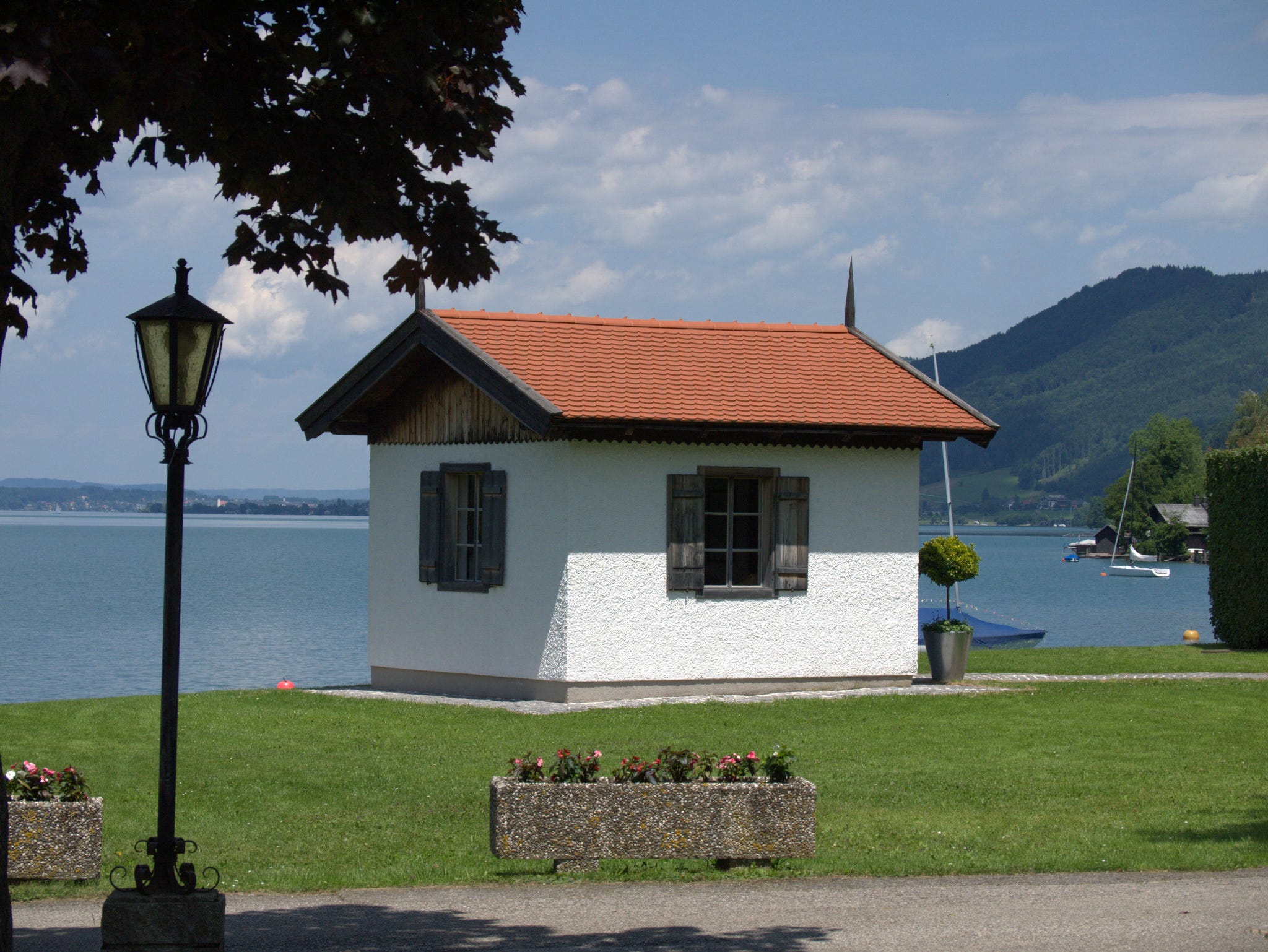
Brahms knew this. He spent years under the shadow of Beethoven, unable to bring his First Symphony into the world until he believed it could stand before that standard. Mahler knew this too. During his summer retreats, he would withdraw into his composing hut, surrounded by mountains, forests, and lakes, and sit with his piano and manuscript paper. There, away from the opera house, away from the public, away from the machinery of musical life, he wrote, note by note, some of the greatest symphonies ever conceived.
No vote was taken.
Nobody told Mahler to write a symphony in C-sharp minor. Nobody demanded the strange funeral march of the First, the cosmic vastness of the Second, or the hammer blows of the Sixth. He wrote them because they came from a private necessity deeper than approval. He did not compose because Vienna requested a product. He composed because something in him had to become sound.
That is the decisive difference.
Great art may have patrons. It may have commissions. It may have deadlines. Mozart’s Requiem was commissioned. Beethoven wrote for publishers and aristocrats. Opera composers wrote for specific theatres, singers, and occasions. But the music itself could not be commissioned in its soul. A patron could request a work. He could not tell Mozart what the music must be. A publisher could ask Beethoven for a piece. He could not dictate the necessity behind a single note.
The occasion may come from outside. The vision does not.
Now measure that against what is presented to us as a peak musical event of modern Europe: a song selected by committee, shaped by calculation, performed by a national delegate, judged by experts, and finally submitted to the vote of the crowd. Its purpose is not to say what must be said. Its purpose is to land. To appeal. To represent. To win.
Win what?
The title of the most popular song in a televised contest.
And every year, one hears the same revealing phrase: “our song.”
What do you think of our song?
By “our,” they mean the Israeli song, the British song, the Austrian song, the Greek song. A song chosen to represent a nation, performed by a delegate, carried into the contest with a flag. But in what sense is it ours? Did you write it? Did I write it? Did anyone in this “we” actually bring it into existence?
Of course not.
Now try to apply the same phrase to a great work of art.
What do you think of our Fifth Symphony?
The sentence is ridiculous. Beethoven’s Fifth is not “ours.” It is Beethoven’s. Every note declares it. Every rhythm, every transition, every struggle, every eruption of force belongs to a specific, irreducible mind. We may love it. We may perform it. We may inherit it. We may feel that it speaks for us. But it is not ours in origin. It is his.
And because it is his, it can become ours in the only meaningful sense.
That is the paradox. The work that comes most deeply from one individual can reach the widest number of human beings. The work that begins as “ours,” as a collective product, as a national entry, as a public mood, usually belongs to no one. It has no centre. No soul. No authorial necessity. It could have been written by someone else, sung by someone else, arranged by someone else, or replaced by another song next year.
But Beethoven’s Fifth could only have been Beethoven.
That is why it remains.
This is not merely a difference in quality. It is a difference in essence. Mahler’s music begins with an individual confronting his own standards. Eurovision begins with the question: what will they vote for?
The great artist may hope to be understood. He may even long for applause. But he does not take a vote before discovering what he has to say. Do we imagine Beethoven composing the Ninth Symphony and wondering whether the Viennese would find the finale catchy enough? Do we imagine Mahler revising the Resurrection Symphony according to audience feedback?
The thought is absurd.
And yet this is precisely why these works became immortal. Not because they ignored the audience in some shallow pose of contempt, but because they were not born from the audience. They came from within. They had a self behind them. They carried the pressure of a mind that demanded existence for its vision.
What is truly one man’s may become universal.
What is merely “ours” is nobody’s.
That is why they endured.
Because before they were ever popular, they were necessary.
III. The False Solitude of Representation
There is another confusion here: the confusion between artistic solitude and political representation.
Eurovision has become, especially for Israelis, a political battlefield. I understand why. When an Israeli singer stands on a European stage while crowds try to boo, silence, or intimidate him/her, something real is at stake. The Israeli flag should not be lowered. The Jewish voice should not be silenced, especially in Europe. If hostile audiences want Israel absent, then there is legitimate pride in refusing to disappear.
But that is a political meaning, not an artistic one.
The singer may carry a flag. He may face hostility. He may require protection. He may become, for a few minutes, a symbol in a national drama. But that does not make the song “ours” in any serious artistic sense. A song cannot belong to a nation merely because it is assigned to represent it. It belongs, if it belongs to anyone, to the mind that created it.
And in Eurovision, even that is blurred.
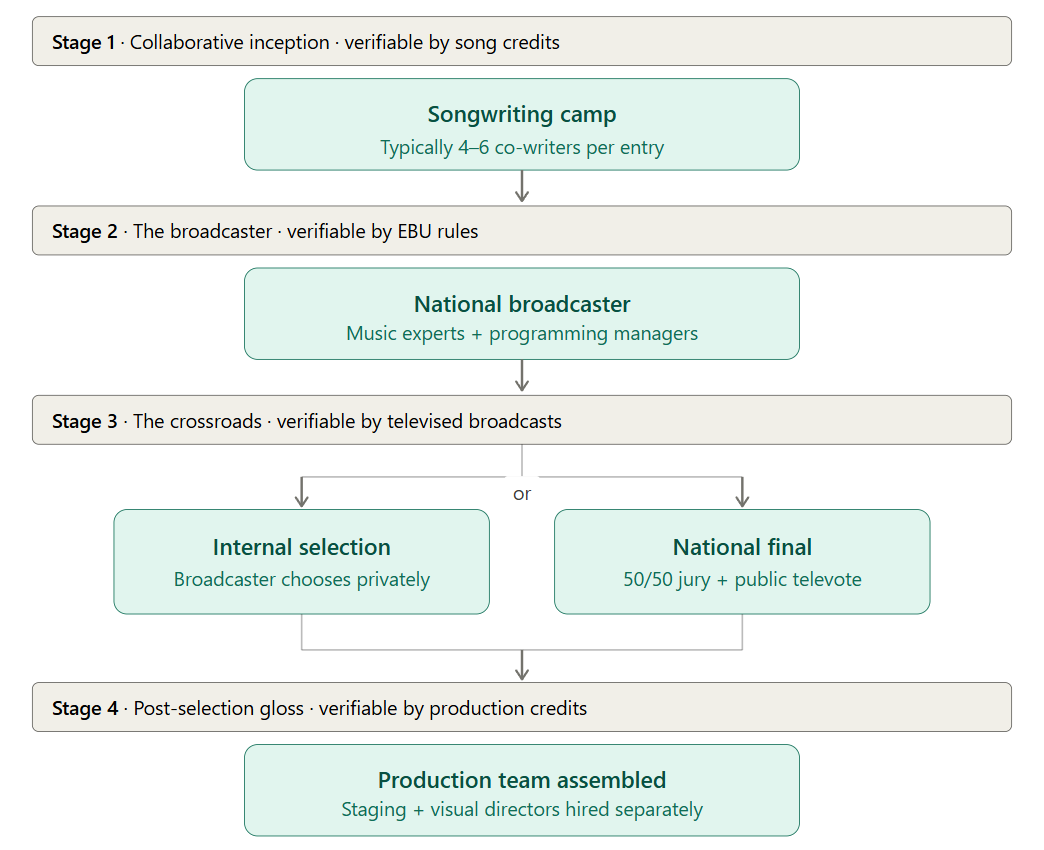
The performer usually does not write the song. The song is produced by writers, polished by a team, shaped for the contest, and sent forward under a flag. The nationality comes first; the art comes second. The question is not, “What did this individual soul need to bring into existence?” The question is, “What will represent us well?”
But nations do not compose music. Individuals do.
This becomes obvious the moment we apply the same logic to great art. What flag would one place over Mahler? He was born in Bohemia, in what is now the Czech Republic. He was a German-speaking Jew. He lived and worked in Vienna. He converted. He conducted in Austria, Germany, and America. He belonged everywhere and nowhere. Would we place an Austrian flag over the Resurrection Symphony? A Czech flag? A Jewish one? A German one?
The question is absurd.
Mahler’s music belongs to Mahler.
So does Beethoven’s. So does Brahms’s. So does Tchaikovsky’s. They may emerge from a language, a landscape, a tradition, a city, a civilisation. They may even incorporate folk tunes, but the work itself is never the property of a nation. It is the creation of a person. The more deeply individual it is, the more widely human it can become.
This is why the hostility faced by the delegate must not be confused with the solitude faced by the artist.

The Eurovision performer may face political hostility. That can be ugly, immoral, even life-threatening. But the hostility is directed primarily at what he represents: the flag, the country, the political meaning of his presence on stage. The conflict is real, but it is symbolic and tribal.
To truly face the hostility of an audience against your own creation, there has to be a self at stake. The work itself has to bear the mark of a self. If the audience rejects it, they are not merely rejecting a flag, a delegation, a costume, or a national symbol. They are rejecting something the artist brought into the world from the deepest, most vulnerable region of his soul.
That is a different level of exposure.
Imagine spending months, years, sometimes decades, perfecting a score that no public has asked for. Imagine carrying in your mind a sound no one else can hear. Imagine writing it down, revising it, suffering over it, bringing it before an audience, and watching them reject it, laugh at it, hiss at it, misunderstand it, or dismantle it in the newspapers the next morning.
Bruckner gives us one of the most painful images of this kind of solitude. He is said to have been asked by Emperor Franz Joseph what wish he wanted granted, and instead of asking for money, status, security, or comfort, he asked that Eduard Hanslick stop insulting him in print. Whether the story has been polished by legend or not, its truth is unmistakable. Here was a man who had written cathedrals in sound, and yet what he wanted, almost childishly, almost heartbreakingly, was for the critic to stop wounding him.
That is artistic solitude.
Not the loneliness of standing for a country against another country, but the loneliness of standing for one’s vision against the world. The loneliness of knowing that what you have made is great before anyone else knows how to hear it.
Great art polarises because it is not content to represent. It challenges. It disturbs. It breaks convention. It pushes perception forward. And for that reason, the artist may stand truly alone, not as a delegate of a people, but as the first citizen of a world only he can yet see.
That is the difference.
The delegate risks being rejected as a symbol.
The artist risks being rejected as a self.
IV. Transmission, Not Reflection
What happens when inner necessity is fulfilled?
It does not remain locked inside the composer. It becomes form. It becomes sound. It becomes something directly perceivable by others. That is the miracle of great music: one man’s private necessity becomes an objective experience that strangers, decades or centuries later, can enter.
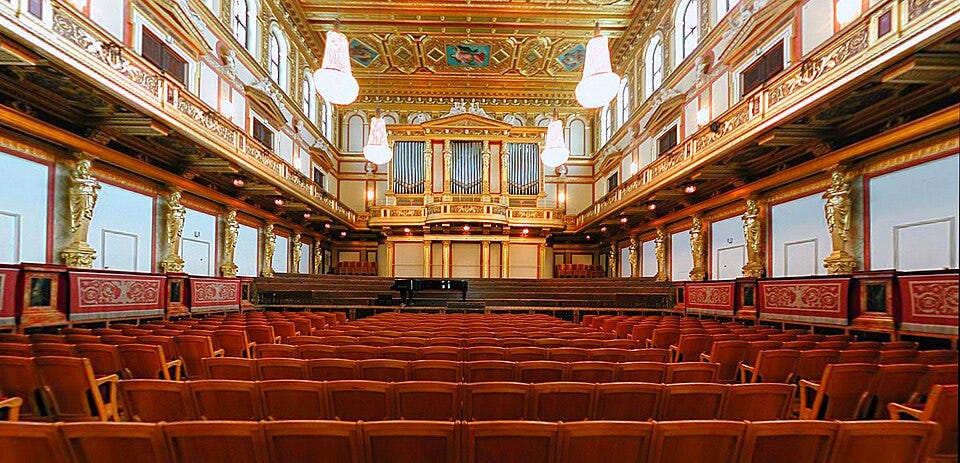
A concert is, in this sense, a kind of communion. We sit among hundreds, sometimes thousands, of people in a hall, all focused on one thing: the work. Whether the music is sung or purely instrumental, whether it speaks through words or only through sound, we sit still and receive it.
In the case of Beethoven’s Fifth Symphony, we are not merely hearing notes in C minor. We are perceiving Beethoven’s vision made audible. The struggle, the compression, the force, the movement from darkness toward triumph — these are not effects pasted onto the work. They are the work. They are the shape Beethoven gave to something he felt had to exist.
That is why it moves us.
Not because someone calculated a reaction, but because the music was written with conviction. The details are not arbitrary decorations. They are the means by which the composer’s inner fire becomes available to us.
And then, in the concert hall, the impossible happens. Through the quality of the work, and depending on the quality of the performance, we are brought into contact with a creative urgency that burned in another human being more than two hundred years ago. We do not merely admire Beethoven from a distance. For a few moments, if the performance is alive, we are in his presence.
That is one of the highest experiences art can offer.
Great art does not merely please us. It changes us. It enters our imagination and remains there. It sets a standard. It does not flatter us by saying, “You are already enough.” It says: “This is what is possible. Now rise up to it.”
That is what Eurovision cannot do.
It can entertain. It can excite. It can be loud, glamorous, moving, tribal, funny, grotesque, or spectacular. But stimulation is not transmission.
Transmission requires a self behind the work. Eurovision, by its nature, offers something else: reflection. It reflects the public back to itself; its moods, fashions, politics, appetites, and need for affirmation. It cannot stand above the audience, because it depends on the audience for its justification.
The function of a mirror is recognition.
The function of art is revelation.
A song written to win may win.
But winning is not transmission.
You cannot be changed by a mirror.
V. The Triumph
It is true that many great artists were not celebrated in their own lifetimes.
Some were ignored. Some were mocked. Some were misunderstood. Some suffered terribly, and perhaps that suffering became part of the pressure from which their art was born. There is a dangerous romance in this idea, and it should not be taken too far. Misery does not create genius. But it is true that genius often grows in opposition: against indifference, against fashion, against the market, against the audience’s inability to understand what stands before it.
But there is one event that proves something equally important.
Great art can triumph.
It can reach the public. It can fill a hall. It can overwhelm thousands. It can become not a private consolation for the misunderstood artist, but a public event of almost unbelievable historic force.
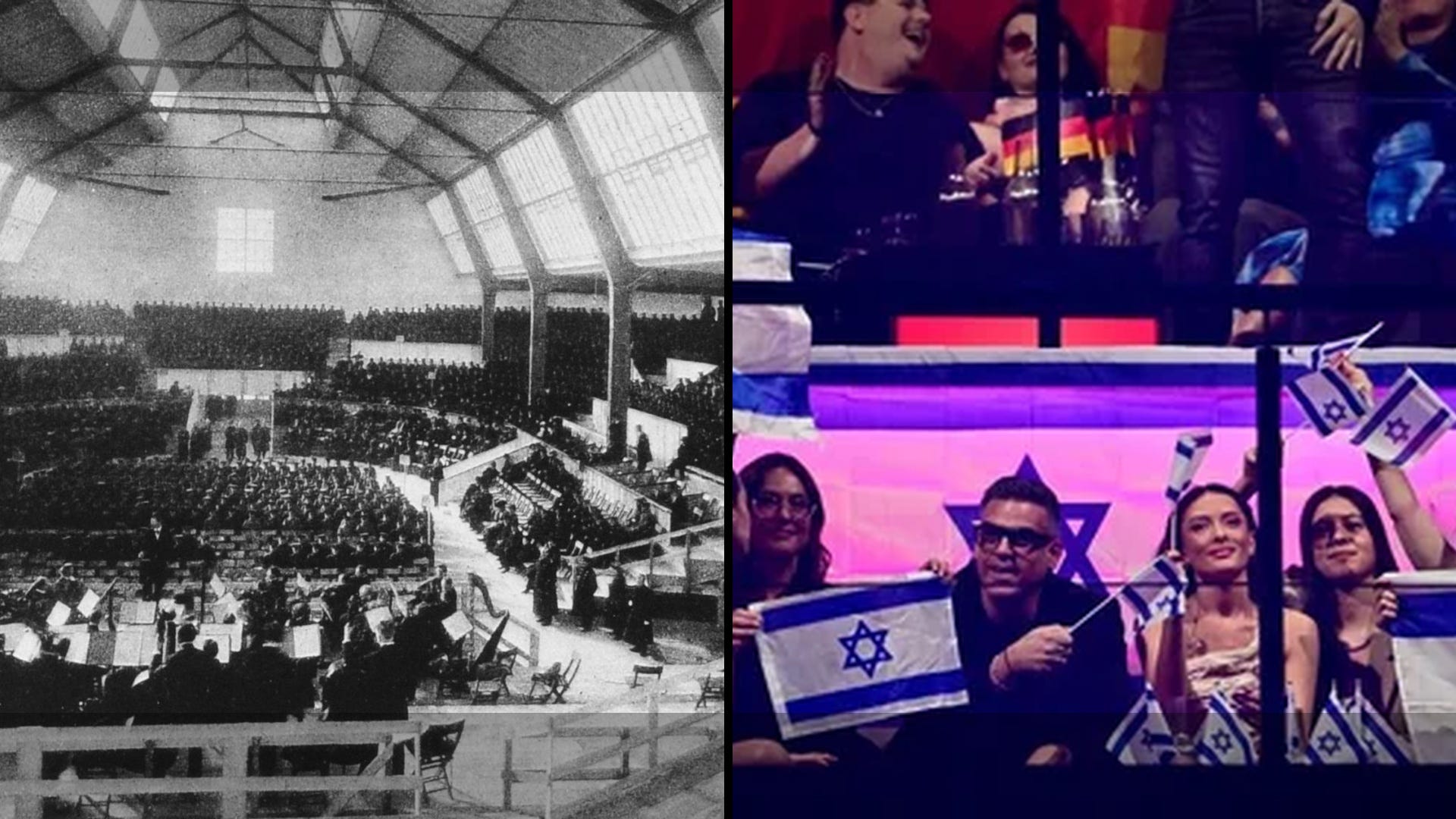
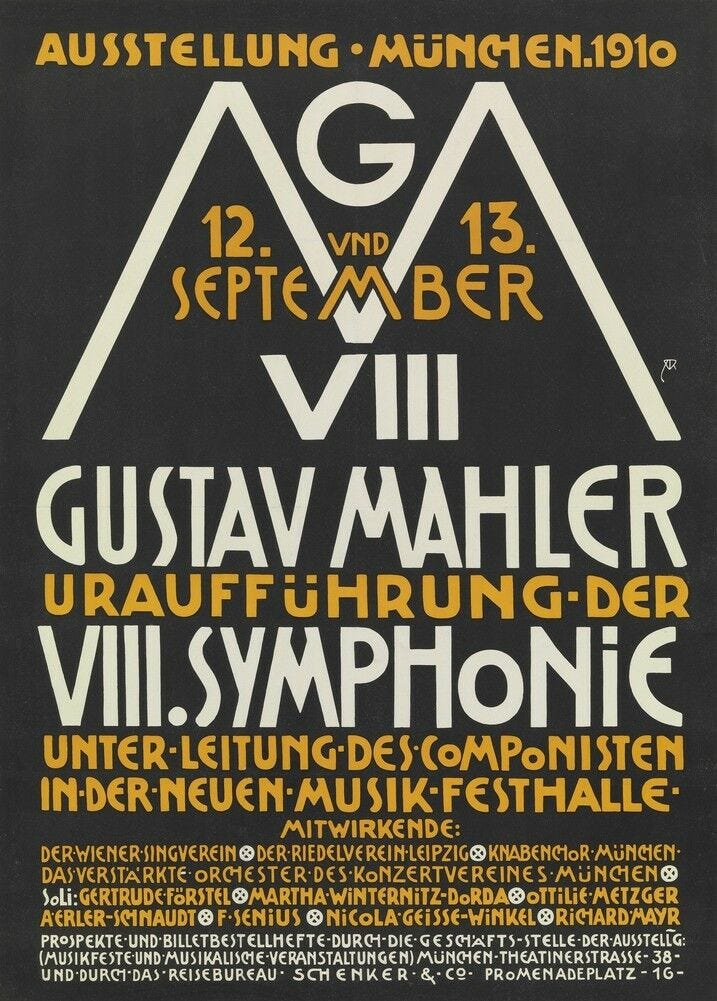
On September 12, 1910, in Munich, Gustav Mahler conducted the world premiere of his Eighth Symphony. The performance took place in the newly built Neue Musik-Festhalle, a vast hall chosen because the work itself required forces beyond ordinary concert life. There were eight vocal soloists, an immense adult chorus, a children’s chorus, and a huge orchestra. The total number of performers was over a thousand, giving rise to the famous nickname, Symphony of a Thousand, though Mahler himself disliked the title.
The work was in two parts: first, the Latin hymn Veni creator spiritus, then the closing scene from Goethe’s Faust. This was not a pleasing symphony enlarged for spectacle. It was a metaphysical undertaking. Mahler joined Christian invocation to Goethean striving, sacred hymn to secular poetry, divine creation to human aspiration. The subject was not merely joy, sorrow, love, or redemption in some sentimental sense. It was the ascent of the human soul: from the cry for creative spirit to the final vision of transfiguration. Mahler had dared to imagine a symphony in which philosophy, literature, and music would become one act of affirmation. It seemed to make not merely instruments and voices sound, but the universe itself.
And he stood there to conduct it.
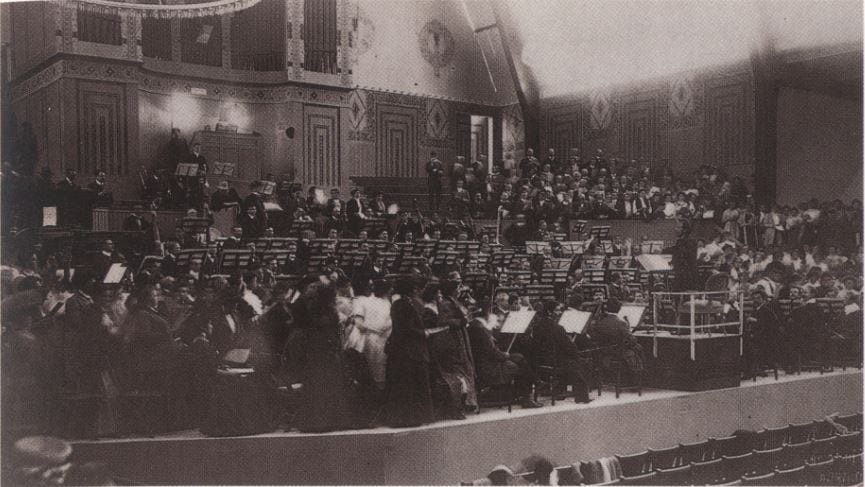
This matters because Mahler had known success, but not of this kind. As a conductor, he was one of the commanding figures of his age. As a composer, he had often been met with confusion, hostility, partial understanding, or polite unease. His symphonies were too long, too strange, too vulgar, too elevated, too ironic, too sincere, too much. They did not fit neatly into the public’s expectations.
But in Munich, for once, the battle became victory.
The audience included major figures of European culture: Thomas Mann, Stefan Zweig, Richard Strauss, Camille Saint-Saëns, Arnold Schoenberg, Alban Berg, the teenage Erich Wolfgang Korngold, Bruno Walter, Leopold Stokowski, Anton Webern, and many others. After the final chords, there was a brief silence, and then the hall erupted. The applause reportedly lasted close to thirty minutes. Thomas Mann later wrote to Mahler, calling him “the man who, as I believe, expresses the art of our time in its profoundest and most sacred form.”
This was not a Eurovision victory.
That evening left almost nothing behind. No recording. No film. A handful of blurry photographs, a sheaf of letters, a few reviews written in the white heat of the following morning. By the material standards of our age, it barely existed. And yet it lives with more force, more presence, more certainty of permanence than any Eurovision production ever committed to tape, streamed in high definition, archived on every platform known to man.
The recorded spectacle fades. The unrecorded truth endures.
The premiere itself vanished into silence. But the work did not. It still fills concert halls. It still summons enormous forces and gathers listeners from across the world into the vision Mahler imagined alone. It is not preserved like a relic. It is alive, urgently alive, because each performance brings it back into the present as something that still demands to be heard. That is permanence: not being stored, but being summoned again.
It was not a win produced by polling, national loyalty, jury calculation, or the manipulation of public appetite. No one voted Mahler into greatness that night. No committee could have invented that work. No audience survey could have produced the opening cry of Veni creator spiritus, or the vast ascent into the final scene of Faust.
The public did not create the work.
The public was conquered by it.
Had you asked even an educated audience member before the premiere what he wanted from a new symphony, would he have imagined this? Would he have known to ask for eight soloists, massive choruses, a children’s choir, a vast orchestra, Latin hymn, Faust, and a structure so enormous that it seemed to burst the walls of the symphonic form itself?
Of course not.
The audience could not have wanted Mahler’s Eighth before Mahler made it possible to want it. It had no category for such a thing. It had no image of it. It could not vote for what it could not yet imagine.
This is where the artist’s inner necessity becomes transmission.
The work began in solitude: one man, manuscript paper, a private fire no public had requested. But because Mahler gave that fire form, because he disciplined it into structure, harmony, orchestration, voices, and movement, it became perceivable. What had first existed inside him could now enter the ears, bodies, and souls of thousands.
That is the power of real creation.
The artist does not ask the audience what it wants. He wants. He sees. He hears. He demands. And if the work is great enough, if the vision has been made objective enough, the audience can meet it. Not as customers receiving a product, but as human beings encountering a world.
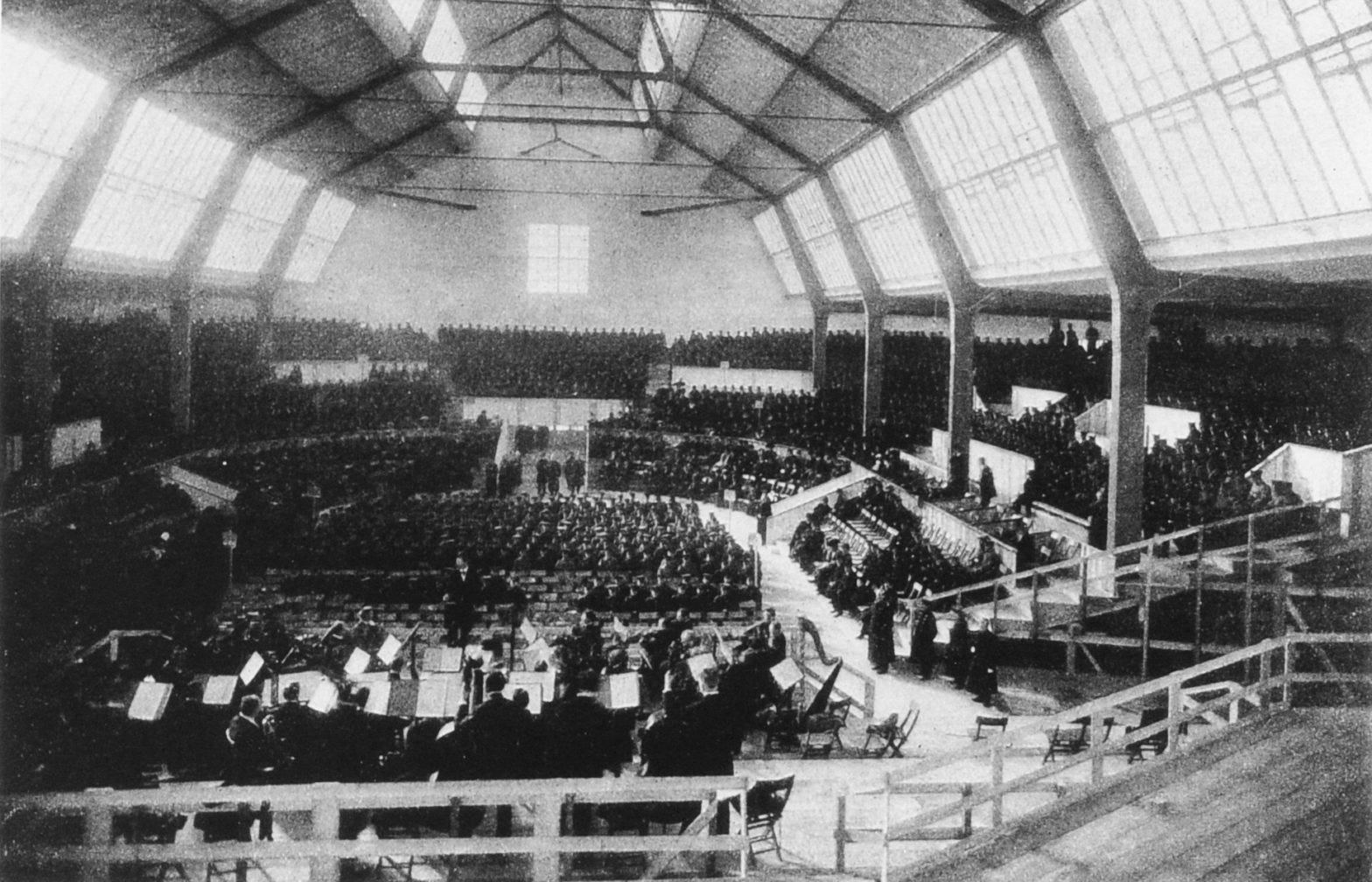
That night in Munich, Mahler transmitted to a mass audience what he had imagined alone.
From inner necessity to sound.
From solitude to shared perception.
From the composing hut to the overflowing hall.
That is the kind of success worth wanting. Not the success of being chosen by the crowd, but the success of bringing the crowd face to face with something it could never have chosen in advance.
Greatness can succeed.
But it succeeds by making the public rise. Not by kneeling before it.
And that is why these giants still walk with us.
Beethoven, Mahler, Brahms, Tchaikovsky, Mozart, Schubert, they follow us through ordinary life because they fulfilled what they demanded of themselves. They did not merely express a mood. They did not merely please an audience. They brought into existence works shaped by conviction, discipline, and uncompromising vision. They gave form to something that had to be.
The Eurovision performer, however talented, does not become that. The song may win. It may trend. It may be celebrated for a night, a week, perhaps even a season. But then next year arrives. A new delegation is chosen. A new “our song” is announced. A new vote is cast. A new winner emerges, already waiting to be replaced.
That is not immortality. It is rotation.
But nobody replaces Beethoven.
Nobody replaces Mahler.
Nobody replaces Mozart.
They are not annual entries in a contest of public taste. They are permanent presences. Their music survives because it was necessary before it was popular. It was one man’s before it became mankind’s.
That is the power of great art.
Not to win the moment, but to outlive it.
If you enjoyed Philosophy: I Need It, and want to see more, you can support my work by buying me a coffee. Every contribution makes a real difference. Thank you!
Nice piece, Yonatan. So Eurovision is to Mahler what the EU is to Israel: dreck masquerading as pomp and circumstance. Israeli letters and music should learn to do better, because only from Israel will something good come as it once came thousands of years ago. The west is finished, and it is hurrying to bury its legacy as quickly a possible.
“For a few moments, if the performance is alive, we are in his presence.
That is one of the highest experiences art can offer.”
So it might seem, but when the artist gives voice not to his individual self but reaches deep within to give voice to the human soul, then the audience hears itself weep, grieve, laugh, joying, having an epiphanic moment.
That is what separates superlative art, sublime art from mediocrity and worse, the temporal drivel you describe that is pop music.